
Leave Your Message
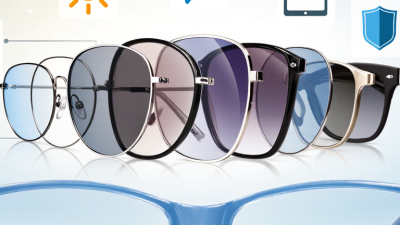
Choosing a Blue Cut Lens supplier involves more than comparing prices. Global buyers must examine optical clarity, filter performance, prescription accuracy, coating durability, and delivery consistency. A sample may look clear under office lighting, yet reveal color shifts beside a white screen. Ask suppliers for spectral-transmission data and clear testing methods. Marketing claims alone are not enough.
This guide compares ten suppliers through practical buying considerations: product range, customization, manufacturing capacity, quality controls, communication, and export readiness. Vision scientist Dr. Lisa Ostrin has studied blue-light exposure and its effects on the eyes. A useful buyer’s principle, reflecting the need to assess evidence carefully, is: “Judge the evidence, not the label.” This is an editorial summary, not a verbatim quotation from Dr. Ostrin.
Look closely at the details. Can the supplier support your prescription range? Are sample lead times realistic? Does the coating resist everyday cleaning without distorting color? These questions can expose gaps that a polished catalog may hide. Blue-light filtering products also vary, and buyers should avoid treating one lens specification as proof of a universal benefit. The strongest partner is not always the cheapest or largest. Sometimes, the best signal is a precise technical reply. This comparison aims to help importers, retailers, and optical brands shortlist suppliers with greater confidence, while leaving room for due diligence. Verify claims, inspect samples, and confirm specifications before placing a large order.
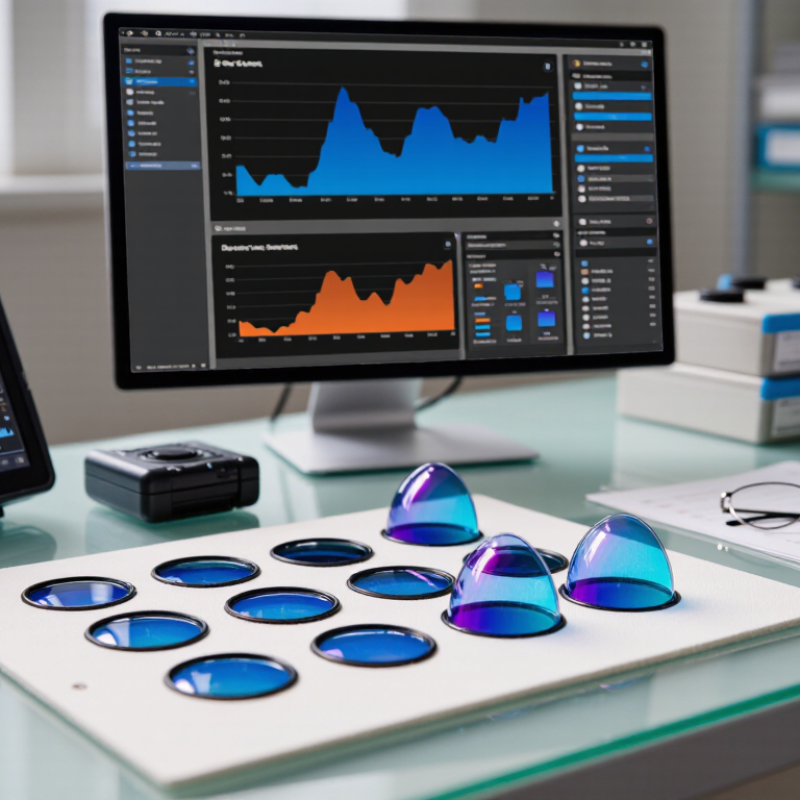
Blue-cut lenses are designed to reduce transmission of selected wavelengths within the blue portion of visible light. They may use filtering materials within the lens or a surface coating. The amount filtered varies by lens design, so “blue-cut” does not describe one consistent level of protection. The label alone tells little.
These lenses do not switch off screen light or block all blue wavelengths. Some research has examined their effect on digital eye strain, but evidence of meaningful relief remains limited. Dryness and tired eyes can also come from reduced blinking, prolonged close focus, or glare. The evidence is not perfectly tidy. Blue light exposure can influence the body’s sleep timing, but brightness, duration, and time of day also matter.
For a practical comparison, ask suppliers for spectral transmission data across specific wavelengths, not just a broad filtering claim. Check sample lenses beside a white page and under ordinary indoor lighting. A noticeable yellow cast may alter color perception, which matters for design work and color checks. Compare coatings for reflections and cleaning marks, too. Small details matter. No lens removes the need for breaks, comfortable screen distance, and balanced lighting.
Blue-cut lenses are designed to reduce the transmission of some short-wavelength visible light. Depending on the lens, this is achieved with an absorbing material or a selective surface coating; the amount and wavelengths filtered vary by product. The supplier types below are procurement categories, not a ranked or audited list of named companies.
| No. | Supplier type | Typical supply | How blue-cut options work | Useful buyer checks |
|---|---|---|---|---|
| 1 | Integrated ophthalmic lens manufacturers | Finished prescription and non-prescription lenses, often with multiple materials and treatments. | Filtering may be incorporated into the lens material, applied as a coating, or offered through both approaches. | Ask for the spectral-transmission data, prescription range, coating details, and product-specific test documentation. |
| 2 | Prescription lens laboratories | Prescription lenses made or finished to an optical prescription, including single-vision and other lens designs. | A lab may source blue-cut blanks or apply compatible treatments during lens processing. | Confirm prescription limits, lens-design availability, edging support, production lead time, and remaking policy. |
| 3 | Stock-lens wholesalers | Ready-made lenses in commonly ordered prescriptions and specifications. | Blue-cut stock lenses generally use a pre-existing absorptive or coated design rather than a treatment selected for each order. | Check available powers, cylinder and axis ranges, base curves, inventory status, and batch traceability. |
| 4 | Private-label lens producers | Lens products manufactured for sale under a buyer’s own label or product range. | Blue-cut specifications can be selected as part of the product brief, subject to the producer’s materials and coating options. | Request written specifications, sample approval, packaging requirements, quality-control records, and minimum order quantities. |
| 5 | Digital surfacing and freeform laboratories | Custom surfaced lenses produced from prescription and lens-design data. | Blue-cut treatment may be available as an added material or coating option; it is separate from the freeform surfacing method. | Verify supported lens designs, prescription parameters, measurement workflow, coating compatibility, and remake terms. |
| 6 | High-index lens specialists | Higher-index lens materials intended to make some prescriptions thinner than comparable lower-index lenses. | Blue-cut filtering may be offered in selected materials or as a compatible coating; availability depends on the product. | Compare refractive index, Abbe value, lens thickness guidance, coating options, and product-specific transmission data. |
| 7 | Photochromic lens suppliers | Lenses that darken in response to ultraviolet light, with some products also responding to portions of visible light. | Blue-light transmission depends on the particular lens design and its state; photochromic function alone does not define blue-cut performance. | Ask for transmission information in clear and activated states, activation conditions, and compatibility with the intended use. |
| 8 | Ophthalmic coating suppliers and coaters | Lens surface treatments, which may include antireflective, scratch-resistant, or selective-filter coatings. | A selective coating can reflect or absorb portions of visible light; reflected color and appearance vary by coating design. | Confirm which lens materials the coating supports, durability testing, care instructions, and whether the supplier also provides finished lenses. |
| 9 | Optical distributors and importers | Regional sourcing and distribution of lenses from one or more manufacturers. | They may offer several blue-cut product options but typically rely on the product specifications supplied by the manufacturer. | Request manufacturer-backed technical documents, country-of-origin information, stock availability, and after-sales support details. |
| 10 | Optical lab networks and service providers | Lens ordering, prescription processing, finishing, and delivery through a service network. | Filtering is determined by the specific lens selected from the network’s product range, not by the ordering service itself. | Check service coverage, order tracking, lens identification, processing standards, and how product specifications are documented. |
Buyer note: “Blue-cut” is not a single standardized level of filtering. Compare product-specific spectral-transmission data rather than relying on the label alone. Blue-cut lenses are not the same as UV-blocking lenses, and UV protection should be checked separately.