2026 Top Myopia Control Lenses for Global Buyers How Effective?
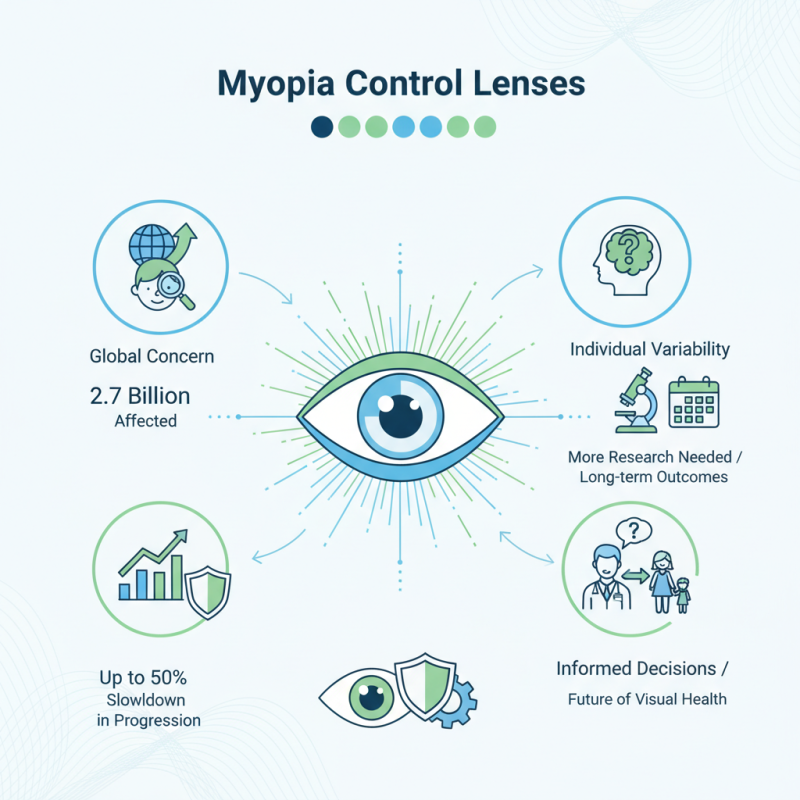
Myopia is a growing concern worldwide. According to the World Health Organization, nearly 2.7 billion people are affected by this refractive error. Myopia control lenses are a crucial innovation aimed at managing this epidemic effectively. Recent studies have shown that these specialized lenses can slow the progression of myopia in children by up to 50%. This statistic highlights the significance of myopia control lenses in maintaining visual health.
However, the effectiveness of these lenses varies based on individual cases. Some children may respond well, while others may show minimal improvement. This variability calls for more extensive research to analyze long-term outcomes. Current data suggests that myopia control lenses offer a potential solution but require careful consideration by both healthcare professionals and parents.
The advances in myopia control lenses are promising, yet there remain gaps in understanding their full impact. Professionals in the field must continue to share knowledge and experiences, ensuring parents make informed decisions. Quality and efficacy remain paramount in the choice of myopia control lenses, as the future of visual health depends on effective management strategies.
Overview of Myopia and Its Global Impact
Myopia, or nearsightedness, has become a significant global health concern. According to the World Health Organization, nearly 2.7 billion people will be affected by myopia by 2025. This surge is notable, especially in urban populations. In some Asian cities, myopia prevalence surpasses 80%, alarming healthcare professionals. Environmental factors, such as increased screen time and limited outdoor activities, contribute significantly to this rise.
The long-term implications of myopia are severe. Individuals with high myopia face a greater risk of developing serious eye conditions. Reports indicate that myopia could lead to nearly 25 million cases of blindness by 2050. This trend emphasizes the urgent need for effective myopia management strategies. Many professionals advocate for the integration of myopia control lenses, which are designed to slow down progression. However, their overall effectiveness remains a topic of discussion. While some studies show promise, conclusive long-term data is still lacking.
Ultimately, tackling myopia will require a multifaceted approach. Awareness programs and regular eye check-ups are essential for early detection. Yet, there remain barriers like access to care and education on myopia prevention. The complexity of the issue continues to challenge experts, highlighting the need for ongoing research and innovative solutions in this field.
Understanding Myopia Control Lenses: Types and Mechanisms
Myopia, or nearsightedness, affects over 2.7 billion people globally, according to recent data. Myopia control lenses are designed to slow its progression. These lenses come in various types, each employing unique mechanisms. Some lens designs, such as orthokeratology (ortho-K), reshape the cornea overnight. Others use multi-focal designs to alter how light focuses on the retina.
Research highlights the effectiveness of these lenses. A study published in the American Journal of Ophthalmology indicated that myopia control lenses could reduce progression by 30% to 60%. These lenses are particularly beneficial for children, whose eyes are still developing. However, user compliance and proper fitting remain critical challenges in their effectiveness.
Tips: Ensure regular eye exams for children and discuss myopia management options with an eye care professional. Remember the importance of outdoor activities; studies show that spending more time outdoors can naturally mitigate myopia development. Lastly, stay informed about recent advancements in lens technology for better choices in myopia control.
Effectiveness of Top Myopia Control Lenses in 2026
As myopia rates continue to rise globally, the effectiveness of top myopia control lenses in 2026 becomes increasingly important. Research highlights that these lenses can slow down the progression of myopia in children. Studies show that specific lens designs help reshape the light entering the eye. These alterations can impact how the eye grows over time.
However, individual results can vary significantly. Some children may respond well, while others might not see substantial benefits. It’s crucial for parents to consult eye care professionals to assess their child's specific needs. Regular eye examinations can detect changes promptly. Engaging with experienced optometrists ensures a tailored approach.
Moreover, myopia control lenses are not a one-size-fits-all solution. Factors such as activity level, genetics, and overall health play key roles. Ongoing research is essential to refine these lenses. Despite advancements, there’s still uncertainty about their long-term impact. An open dialogue between healthcare providers and parents will be vital for future strategies.
2026 Top Myopia Control Lenses for Global Buyers How Effective?
| Lens Type |
Material |
Effectiveness (%) |
Age Group |
Wear Duration |
| Multifocal |
Polycarbonate |
70 |
6-18 years |
Daily |
| Orthokeratology |
Gas-permeable |
80 |
8-16 years |
Nightly |
| Bifocal |
High-index plastic |
65 |
7-14 years |
Daily |
| MiSight |
Hydrogel |
75 |
8-12 years |
Daily |
| Dual-Focus |
Silicone hydrogel |
77 |
5-15 years |
Daily |
Comparative Analysis of Leading Brands for Global Buyers
In recent years, myopia control lenses have gained popularity, driven by the alarming rise in myopia rates globally. According to the World Health Organization, nearly 2.7 billion individuals will be affected by myopia by 2025. Various manufacturers have introduced innovative lens designs intended to slow this progression. A comparative analysis of leading brands reveals significant differences in effectiveness.
Studies show that lenses using innovative optical designs can reduce myopic progression by up to 50%. Not all products yield the same results. For instance, some lenses provide limited effectiveness, particularly for younger wearers, who might need more targeted solutions. Additionally, comfort levels and light transmission can vary significantly among brands. It is vital to consider these factors when choosing myopia control lenses.
Expert analysis indicates that adaptability can influence patient adherence to these solutions. While data suggests high effectiveness rates, user experience varies. Some wearers may find certain designs uncomfortable. Others report a learning curve when adjusting to different visual perceptions. Ongoing clinical trials will further clarify the most effective options for diverse needs. In a landscape of continuous innovation, staying informed on effectiveness and comfort is crucial for optimal myopia management.
Pros and Cons of Using Myopia Control Lenses for Children and Adults
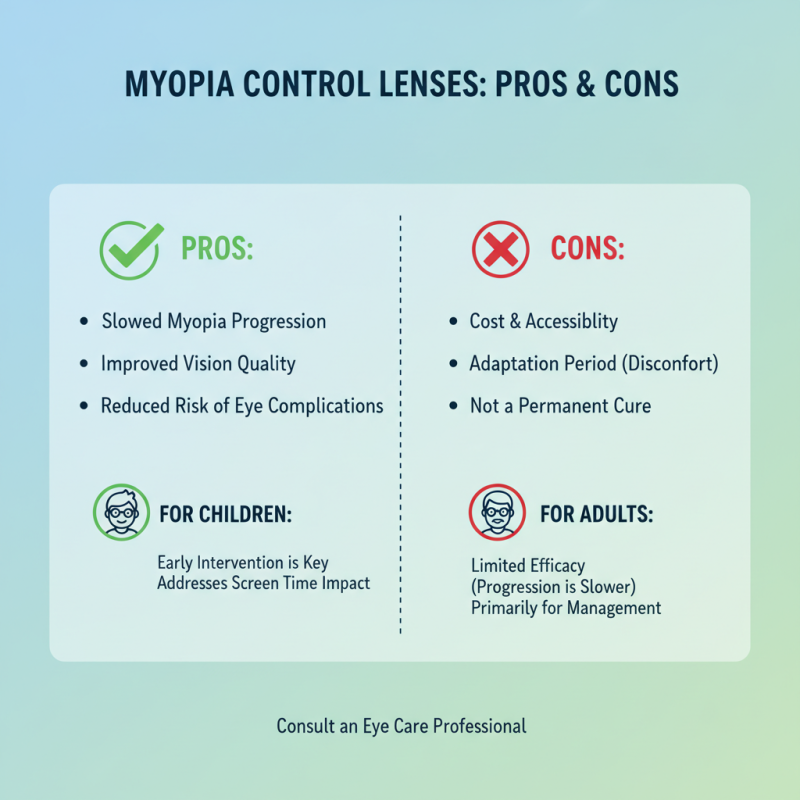
Myopia control lenses have gained attention for their potential benefits in managing nearsightedness. They are designed to slow the progression of myopia in both children and adults. This approach offers hope, especially for parents concerned about their child's vision. Children often spend many hours on screens. This can increase the risk of developing higher levels of myopia. Thus, innovative lenses might help by altering how light enters the eye.
However, these lenses are not a cure-all. Some individuals experience discomfort or distorted vision while adjusting to them. It's crucial to have realistic expectations. Health professionals advise regular eye exams, as they can provide important feedback on the effectiveness of these lenses. Not every myopic individual will benefit equally; some may see only minimal improvement.
While myopia control lenses show promise, they also require careful consideration. Education about their pros and cons is essential. This includes understanding their limitations. A personalized approach is key. Each person's eyes are unique, thus requiring tailored solutions. Parents and adults must weigh the potential advantages against any drawbacks.