Best Myopia Control Lenses for Clear Vision in 2026?
In recent years, the demand for Myopia Control Lenses has surged. With myopia affecting over 30% of the global population, experts stress the urgency for effective solutions. A 2022 report by the World Health Organization highlights that by 2050, nearly half of the world's population will be myopic if current trends continue. This underscores the importance of advanced lenses in controlling myopia progression.
Dr. Emily Chan, a leading researcher in optometry, asserts, “Myopia Control Lenses offer a proactive approach to managing vision health.” Her insights emphasize the need for tailored solutions to combat rising myopia rates. Despite advances, not every lens meets the needs of every patient. Some lenses may provide comfort but less effective control.
The landscape of Myopia Control Lenses is evolving rapidly. Innovations are promising, yet it is essential to scrutinize each option carefully. The pursuit of clear vision in 2026 hinges on balancing effectiveness with patient comfort. Understanding the nuances of these lenses can make all the difference.

Best Myopia Control Lenses Overview: Understanding the Options
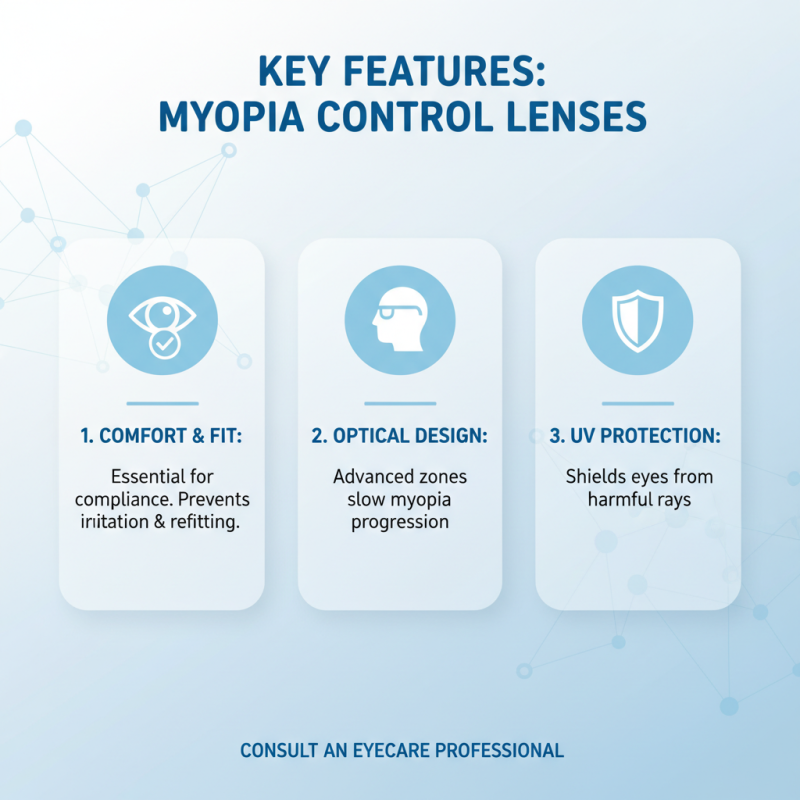
Myopia, or nearsightedness, affects millions and is on the rise. Understanding myopia control lenses can help manage this condition effectively. Today’s options include dual-focus lenses, orthokeratology, and multifocal lenses. These lenses work by altering how light enters the eye. This can slow down the progression of myopia, especially in children.
When choosing lenses, consult an eye care professional. They can evaluate your specific needs and recommend appropriate options. Keep in mind that individual responses to lenses can vary. It is crucial to monitor changes in vision regularly.
Tips for managing myopia include limiting screen time. Encourage children to take breaks from digital devices. Outdoor activities can also reduce myopia progression. Sunlight exposure is beneficial, but remember to protect the eyes from UV rays. Lastly, a regular eye exam is essential for maintaining eye health. Pay attention to changes in eyesight. Early detection can make a significant difference.
Best Myopia Control Lenses Overview for 2026
This chart presents the popularity index of various myopia control lenses for the year 2026. The data suggests that Dual-Focus lenses are the most popular choice, while Progressive Lenses are the least favored option among users.
Top Myopia Control Lenses Available in 2026
As myopia continues to rise globally, effective control methods are essential. Various lenses have emerged in recent years, designed to help manage this condition. In 2026, new options show promise for those struggling with myopia. Innovations focus on altering how light enters the eye, potentially slowing eye growth. These lenses offer wearers clear vision and a chance to reduce the progression of their myopia.
Some lenses utilize special designs to create a unique visual experience. They often incorporate multiple zones for varying distances. Users may find it takes time to adjust to these new formats. Comfort levels vary among individuals. It’s crucial to consult with an eye care professional before making a decision. Factors such as age, degree of myopia, and lifestyle play significant roles in selecting the best lenses.
Exploring these advancements provides hope for many. However, challenges remain in ensuring widespread accessibility and affordability. The effectiveness of these lenses can differ significantly from person to person. It’s essential to maintain realistic expectations and engage in regular eye check-ups for optimal care. As technology evolves, so does the potential for improved visual health.
Best Myopia Control Lenses for Clear Vision in 2026
| Lens Type |
Control Method |
Age Group |
Expected Efficacy |
Duration of Use |
| Orthokeratology Lenses |
Corneal reshaping |
6-25 years |
Up to 50% reduction |
Nightly use |
| Multifocal Soft Lenses |
Peripheral defocus |
6-18 years |
20-30% reduction |
Daily use |
| Atropine Eye Drops |
Low-dose medication |
5-16 years |
Up to 60% reduction |
Daily use |
| Myopia Control Spectacles |
Peripheral defocus |
6-25 years |
15-25% reduction |
Daily use |
Comparative Analysis of Efficacy Among Leading Lenses
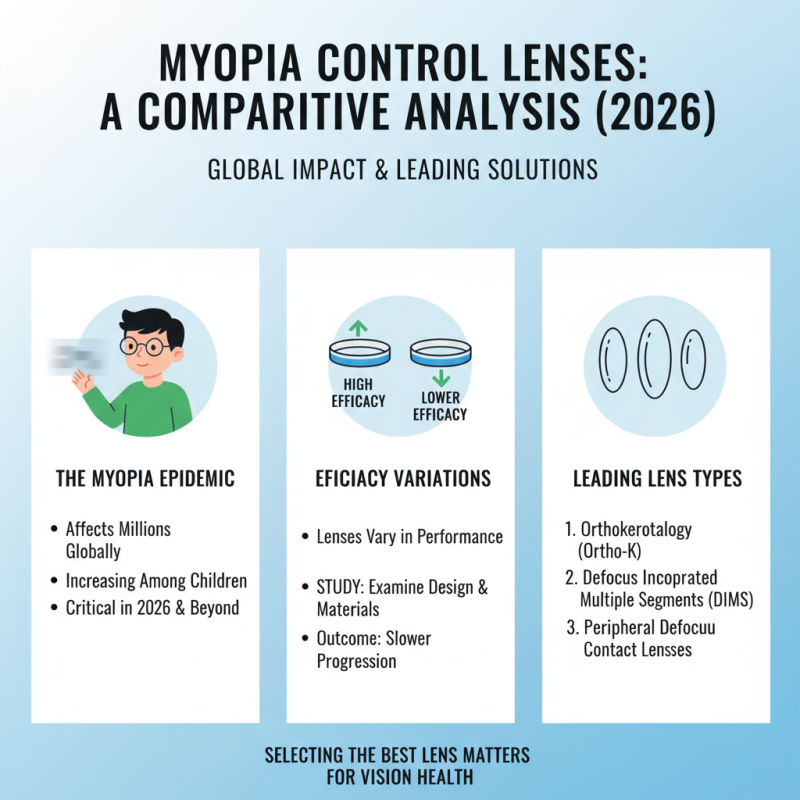
Myopia, or nearsightedness, is a condition that affects millions. Recent studies show that its prevalence is increasing globally, especially among children. In 2026, selecting the best myopia control lenses will be more critical than ever. Leading lenses today often vary in efficacy, requiring a closer examination of their performance and features.
According to a report from the Vision Council, lenses designed for myopia management can reduce the progression of nearsightedness by up to 50%. However, the effectiveness of these lenses can differ significantly. One study indicated that certain lenses yielded better outcomes in children aged six to twelve. Still, there are variations based on individual lifestyle factors, such as screen time and outdoor activity levels. It appears there’s no one-size-fits-all solution.
**Tip:** Regular eye check-ups are vital. Tracking vision changes can help in making timely adjustments to lens prescriptions.
It’s important to consider that not all lenses work equally for everyone. Some users may experience discomfort when transitioning to new lenses. Monitoring their response is critical. Also, understanding the role of lifestyle choices cannot be understated. Encouraging outdoor activities can complement lens use for better vision outcomes. The road to clearer vision is complex and varies person to person.
Future Trends in Myopia Control Lens Development
The future of myopia control lenses is promising. Recent studies predict that by 2026, the global myopia management market could reach $5 billion. This growth is driven by advancements in lens technology and increased awareness of myopia. Researchers are focusing on multifocal designs that help slow eye elongation.
Innovations are occurring at a rapid pace. Current lenses use specific powers to create a gradient effect. This effect can reduce the risk of myopia progression by 30% to 50%, according to recent clinical data. Incorporating new materials may enhance comfort and usability. However, challenges persist. Not all patients respond to these lenses, and ongoing adjustments can be inconvenient for users.
More research is needed to refine these technologies. Further studies will improve our understanding of individual responses. Tracking effectiveness and user satisfaction remains crucial. As we look ahead, engaging with new data and patient feedback will shape future developments in myopia control lenses.