Top Tips for Choosing Optical Lenses for Your Business?
Choosing the right optical lenses for your business is crucial. The global optical lens market is expected to reach $24.8 billion by 2025, according to a recent report by Grand View Research. Selecting lenses impacts not only product quality but also customer satisfaction. Dr. Amanda Lin, an industry expert, once stated, “The right optical lens can enhance visual clarity and boost brand trust.”
Different factors influence lens selection. Consider materials, coatings, and specific customer needs. High-index lenses minimize thickness, while anti-reflective coatings improve visibility. According to the Vision Council, 70% of consumers prioritize lens quality over other features. Businesses should reflect on their offerings and ensure they align with customer expectations.
Make informed decisions when choosing optical lenses. Evaluate supplier reliability and product range. Testing prototypes can provide valuable insights. Remember, an imperfect choice can lead to customer dissatisfaction. Striving for excellence in lens selection will ultimately shape your brand’s reputation in the competitive optical industry.

Understanding Different Types of Optical Lenses Available for Businesses
When selecting optical lenses for your business, it is crucial to understand the various types available. The main categories include single vision, bifocal, and progressive lenses. Single vision lenses cater to one vision problem, making them suitable for many professionals. These are typically used for standard prescriptions.
Bifocal lenses feature two distinct optical powers. They are beneficial for individuals who require assistance with both distance and close-up vision. Users often find the line separating the two prescriptions to be an adjustment. Progressive lenses, on the other hand, provide a smooth transition between multiple prescriptions without visible lines. They offer a more natural visual experience but may take longer for users to adapt.
When choosing lenses, consider the primary use. Will they be for office work, outdoor activities, or perhaps specialized tasks? Each lens type serves a different purpose. This decision has implications for comfort and performance. It’s essential to reflect on how these choices affect daily operations. Keep in mind that not every employee may adjust quickly to new lenses. Evaluating your needs carefully helps in making a choice that supports productivity.
Evaluating the Importance of Lens Coatings and Treatments
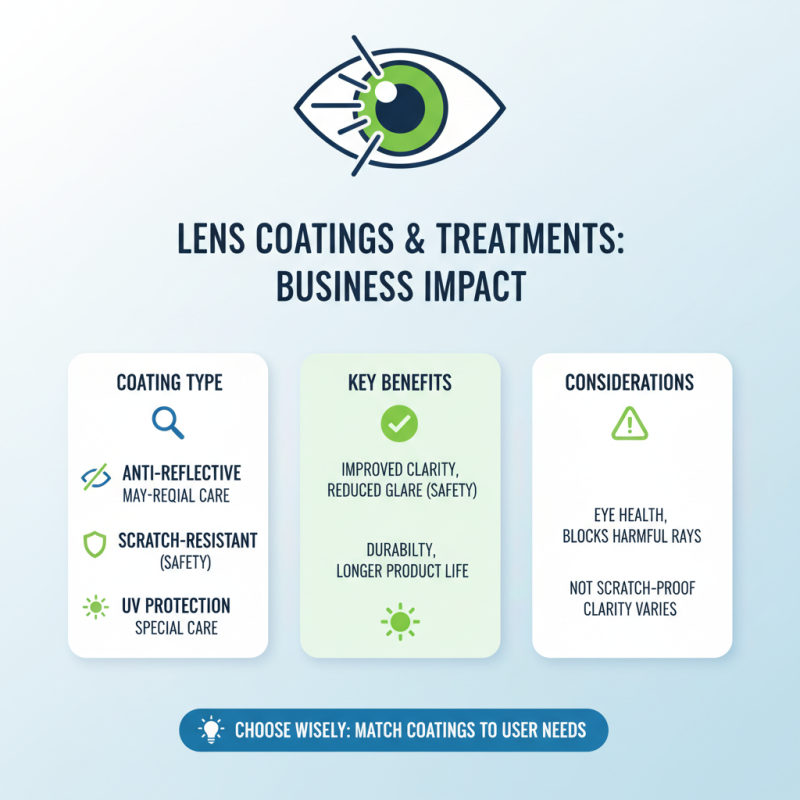
Choosing the right lens coatings and treatments can greatly influence your business’s optical products. Different coatings serve various purposes, impacting users' experiences. For instance, anti-reflective coatings improve clarity by reducing glare. This can enhance safety for users in bright environments. However, not every coating will suit every situation. Some may scratch easily or require special care.
Additionally, understanding UV protection in lens coatings is crucial. Prolonged exposure to UV rays can lead to long-term eye damage. Offering lenses with adequate UV shielding can set your business apart. However, it’s essential to balance quality with cost. A cheaper lens with limited protection may not be the best option in the long run.
Keep in mind that treatments like anti-fog are invaluable in certain industries. But a lens that fogs easily can frustrate users. Evaluate the specific needs of your customer base. Consider conducting surveys to gather feedback about preferred features. Listening to user experiences will guide your decisions. Invest in research to offer reliable products continually.
Assessing the Optical Quality and Performance Specifications
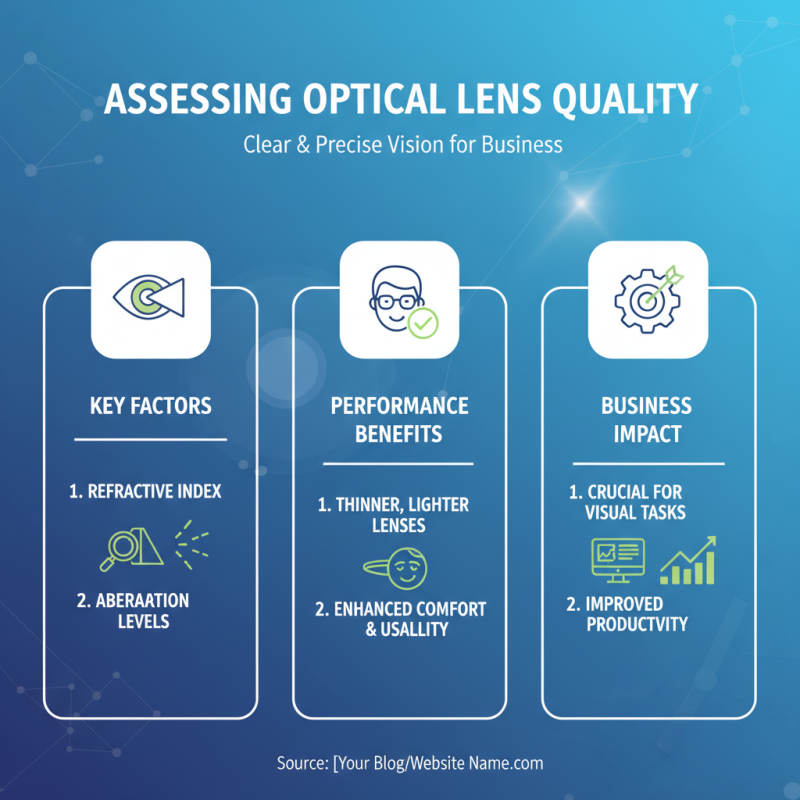
When selecting optical lenses, assess their optical quality and performance specifications carefully. Clear and precise vision is crucial for any business reliant on visual tasks. Consider factors like refractive index and aberration levels. High refractive indices allow for thinner, lighter lenses, which enhance comfort and usability.
The lens coating also plays a vital role. Anti-reflective coatings improve clarity by reducing glare. However, they may require more frequent cleaning. Some improvements come with trade-offs, like increased maintenance. Understand which features best suit your business needs for optimal performance.
Evaluating distortion and light transmission is also essential. Poorly made lenses can lead to visual fatigue. Regular testing and quality checks ensure that you maintain high standards. It's easy to overlook these aspects while focusing on cost. Striking a balance between cost and quality demands thoughtful consideration. Ensuring the right specifications ultimately protects your business's bottom line and enhances productivity.
Considering Cost vs. Benefit in Optical Lens Selection
When selecting optical lenses for your business, it's crucial to weigh cost against benefit. A low upfront cost might seem attractive, but it may lead to higher long-term expenses. Cheaper lenses may compromise quality, resulting in frequent replacements. Consider durability when making your choice.
One tip is to analyze the total lifecycle cost of lenses. Look beyond initial purchase prices. Evaluate maintenance, replacement frequencies, and customer satisfaction. Investing in higher-quality lenses might save money later.
Also, examine the specific needs of your customers. A one-size-fits-all strategy may fail. Tailoring your selection can enhance customer loyalty. Different environments may require different lens qualities. Balancing cost and performance is essential for sustainable growth.
Researching Vendor Reputation and Customer Support Services
When selecting optical lenses for your business, vendor reputation is crucial. A vendor's history speaks volumes. Look for reviews and testimonials. Genuine feedback reveals how manufacturers treat their clients. Seek details about their experience. A vendor with years in the industry often shows reliability. They should demonstrate a strong commitment to quality.
Customer support is another essential factor. Does the vendor offer accessible support? Quick response times can prevent problems from escalating. Having a knowledgeable team can guide you through any issues. Evaluate their willingness to assist. Regular communication can build trust.
Reflect on how vendors handle complaints. A company that takes feedback seriously shows commitment to customer satisfaction. Transparency in policies and procedures is vital. Trust your instincts. If something feels off, it probably is. Your choice can significantly impact your business.
Top Tips for Choosing Optical Lenses for Your Business
| Criteria |
Details |
Importance Level |
| Vendor Reputation |
Look for vendors with strong customer feedback and reviews. |
High |
| Quality of Lenses |
Assess materials used and manufacturing standards. |
High |
| Customer Support Services |
Evaluate availability of support and responsiveness. |
Medium |
| Pricing Structure |
Compare pricing models and any hidden fees. |
Medium |
| Warranty and Return Policy |
Review the warranty offered and return options available. |
High |
| Delivery Times |
Check estimated delivery times and shipping options. |
Medium |