

Leave Your Message

China Top 10 Photochromic Lenses Manufacturers?

Photochromic Lenses are moving from a niche optical feature into a mainstream vision-care product. Grand View Research and Research and Markets both report steady growth in the global photochromic lens sector, supported by rising UV-awareness, outdoor lifestyles, and demand for convenient eyewear. Their analyses also highlight material innovation, faster activation, and improved indoor clarity as important competitive factors. The figures vary between reports. That difference deserves attention.

Dr. Gary Heiting, OD, explains, “Photochromic lenses darken when exposed to ultraviolet light and become clear again indoors.” This simple principle hides a demanding manufacturing process. Precise dye chemistry, coating uniformity, temperature performance, and optical quality all influence the final user experience. A lens that darkens unevenly can feel disappointing, even when its specifications look impressive.

This guide examines China’s top 10 Photochromic Lenses manufacturers through practical indicators. These include production capability, technology ownership, quality systems, customization support, export experience, and after-sales reliability. Certifications such as ISO 9001, CE, and FDA registration may strengthen credibility, but certificates alone do not prove consistent performance. Factory audits still matter. So do sample tests.

Some rankings may remain debatable. Public company data is not always complete, and manufacturers may emphasize different strengths. Therefore, this overview should support supplier research rather than replace technical verification. Readers should compare coating durability, transition speed, UV protection, prescription accuracy, and delivery records before making a purchasing decision.
China Top 10 Photochromic Lenses Manufacturers?

Photochromic Lenses: Definition, Features, and Working Principles

Photochromic lenses are clear indoors and darken outdoors when exposed to ultraviolet radiation. They contain light-sensitive molecules that change structure under UV energy. This reaction increases visible-light absorption, creating a sunglasses effect without changing the frame.

The process is reversible. When UV exposure decreases, the molecules gradually return to their original state. Temperature matters. Cold conditions usually produce deeper darkening, while heat can slow activation and reduce the final tint. The windshield problem remains: many vehicle windscreens block much of the UV needed for activation. Indoor lighting rarely triggers a noticeable response.

Grand View Research valued the global eyewear market at about USD 147 billion in 2023, showing the scale of optical demand. Industry analysis also identifies prescription sun protection as a growing product segment.

However, market figures vary because reports classify photochromic products differently. That deserves caution.

From practical dispensing experience, users notice more than darkness. They notice transition speed, glare comfort, color neutrality, and performance behind glass. A lens may darken quickly but fade slowly in a hot car. Coatings, lens material, prescription power, and surface reflections also affect comfort. Photochromic lenses are not perfect replacements for every pair of sunglasses. Their value depends on the wearer’s daily exposure, driving habits, and sensitivity to changing light.

China’s Photochromic Lens Manufacturing Landscape

China’s photochromic lens manufacturing landscape spans large-volume factories, specialist coating facilities, and integrated suppliers serving domestic and export markets. Their capabilities can differ widely. Some focus on resin lenses, while others work with polycarbonate substrates or apply photochromic layers through controlled coating processes.

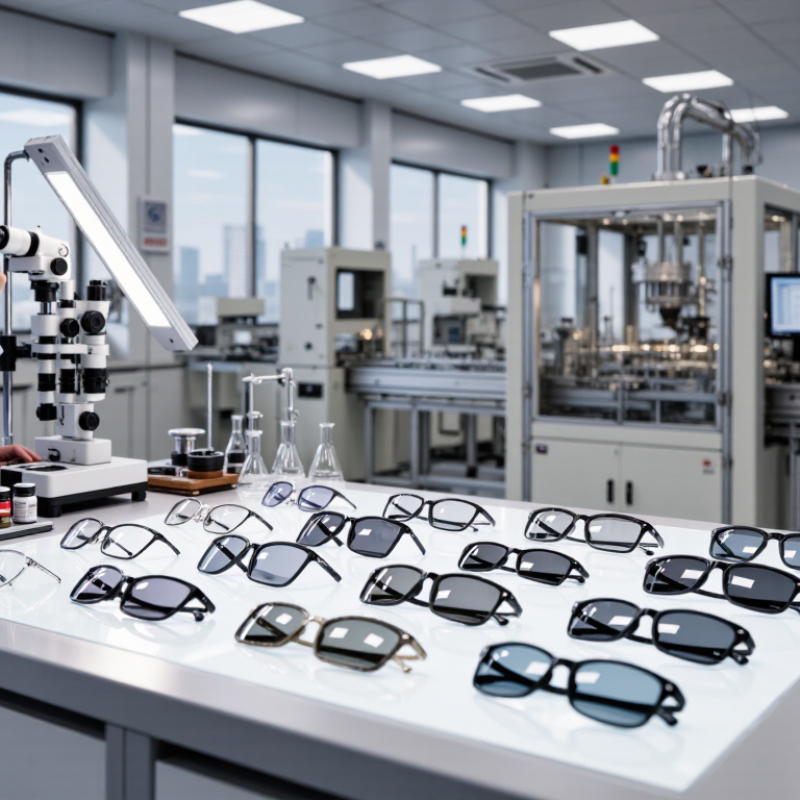
A lens passes through several practical checkpoints: substrate preparation, photochromic treatment, curing, edging compatibility, and inspection. Technicians may compare activation and fading under measured light, then check tint uniformity across the lens. Small differences matter. Uneven color near the edges can affect both appearance and customer confidence. Temperature also changes how quickly many photochromic lenses darken or clear, so test conditions should be recorded.

A “top ten” ranking can be misleading when suppliers use different test methods or disclose limited production data. Buyers should ask for recent test reports, batch consistency records, coating durability results, and clear explanations of UV performance. Details matter. Yet specifications alone do not reveal every production issue; long-term consistency can be harder to judge than a sample lens. That part deserves more scrutiny. Comparing factories by verified process control, technical support, and delivery reliability gives a more useful picture of China’s manufacturing landscape than ranking names alone.

China Top 10 Photochromic Lenses Manufacturers? - China’s Photochromic Lens Manufacturing Landscape

A capability-based overview of ten common supplier and production profiles in the photochromic lens value chain. These entries are not company names, verified manufacturer rankings, or claims that every supplier offers every capability.

No. Manufacturer Profile Typical Product Scope Photochromic Process or Role Useful Evaluation Criteria
1 Integrated prescription lens producer Finished single-vision, bifocal, and progressive lenses in prescription ranges supported by its equipment. May combine photochromic lens blanks with surfacing, edging, hard coating, and anti-reflective coating services. Prescription range, order accuracy, coating compatibility, production lead time, and documented inspection procedures.
2 Photochromic lens blank producer Semi-finished or finished blanks supplied to optical laboratories and lens distributors. Produces or sources photochromic blanks before downstream prescription surfacing and finishing. Blank availability, base curves, material options, batch traceability, and consistency between production lots.
3 Mass-embedded lens specialist Photochromic lenses made with a photochromic system incorporated into the lens material. Photochromic compounds are incorporated within the substrate during material processing; performance depends on the material and formulation. Material specification, activation and fade testing, color uniformity, and performance across temperature conditions.
4 Surface-treated lens specialist Photochromic lenses using a treatment applied at or near the lens surface. Uses a surface application process, such as a coating or imbibing process, depending on the product design. Layer uniformity, abrasion resistance, coating adhesion, compatibility with other coatings, and care instructions.
5 Resin lens manufacturer Plastic lenses, which may include materials such as CR-39 or other optical resins. Photochromic technology may be incorporated into the material or applied through a compatible surface process. Refractive index, impact and scratch protection options, optical quality, and verified photochromic performance.
6 High-index lens manufacturer Thinner prescription lens options using high-index optical materials. Photochromic availability depends on the specific substrate and process pairing; it should be confirmed for each product. Index and Abbe value specifications, available prescriptions, lens thickness guidance, and coating compatibility.
7 Polycarbonate and impact-resistant lens producer Lightweight, impact-resistant lens options commonly used in safety, sports, and children’s eyewear. May offer photochromic versions when the photochromic process is compatible with the substrate and intended use. Applicable impact-test documentation, UV specifications, optical quality, and suitability for the intended application.
8 Coating and lens-finishing specialist Hard-coated, anti-reflective, and other finished lens products or contract finishing services. Applies or integrates finishing layers; photochromic performance must be assessed alongside the complete coating stack. Coating adhesion, abrasion testing, reflectance specifications, process controls, and compatibility with photochromic layers.
9 Prescription laboratory and custom-order producer Made-to-order lenses surfaced and finished from suitable blanks. Sources compatible photochromic blanks and completes prescription-specific processing and finishing. Prescription tolerance, cylinder and prism capabilities, remake policy, job tracking, and delivery performance.
10 Private-label and contract manufacturing supplier Custom packaging, specifications, or production services for wholesale and optical customers. May manufacture, finish, or coordinate supply of photochromic lenses according to agreed specifications. Factory and product documentation, sample approval, change-control procedures, traceability, and clarity on the actual manufacturing role.

Photochromic lenses generally darken in response to ultraviolet and, depending on the product, visible light; activation and fading can vary with temperature, lens material, and product design. Request product-specific test data and confirm the manufacturing site, process, and specifications before comparing suppliers.

Top 10 Chinese Photochromic Lens Manufacturers

China’s top 10 photochromic lens manufacturers are competing through material control, coating reliability, and faster customization. Many produce lenses in 1.56, 1.60, and 1.67 index materials. Their products may support gray, brown, or green activation. Some factories also offer prescription processing, blue-light filtering, and anti-reflective coatings.

Performance depends on more than darkening speed. A reliable manufacturer should test UV response, fading time, surface hardness, and coating adhesion. Factory teams often use climate chambers, abrasion equipment, and optical inspection systems. Ask for batch reports, not only attractive samples. A lens that changes quickly outdoors may fade slowly indoors. That difference matters during daily driving or office use. It is easy to overlook.

The strongest Chinese suppliers usually maintain documented quality procedures and traceable production records. Buyers should check whether testing follows recognized optical and safety standards. Production capacity also matters when orders involve several prescriptions or repeated colors. Packaging should protect lenses from heat, moisture, and scratches during shipping. Communication is another practical test. Technical teams should explain base curves, transmittance, warranty limits, and recommended storage conditions clearly. Some factories provide excellent samples but inconsistent later batches. That possibility deserves attention. Comparing ten manufacturers through samples, inspection records, response quality, and after-sales handling gives a more dependable view than ranking by price alone.

Manufacturing Standards, Technologies, and Product Differences

China’s top photochromic lens manufacturers differ less by catalog size than by process control. Reliable factories usually document raw material batches, coating thickness, curing temperatures, and final optical inspection. ISO 9001 systems can support consistency, but certification alone does not prove lens performance. Buyers should request current test reports and production records.

Photochromic lenses commonly use light-sensitive dyes within or near the lens material. Some factories combine this technology with anti-reflective, scratch-resistant, hydrophobic, or blue-light filtering coatings. Activation speed, fading time, color depth, and temperature response vary considerably. A gray lens may reach a neutral appearance outdoors, while a brown lens can create warmer contrast. High-index materials reduce thickness, but they may require stricter coating control.

Testing should include ultraviolet protection, visible light transmission, surface hardness, adhesion, and repeated activation cycles. Ask whether results come from internal equipment or an independent laboratory. A practical sample check helps: place identical lenses outdoors, record darkening after five minutes, then compare fading indoors. Small differences matter. Some suppliers provide impressive samples but inconsistent bulk batches. That risk deserves attention. Manufacturing experience, traceable inspection, and clear communication often matter more than the lowest quotation. Even so, specifications can be incomplete, and buyers should keep questioning unclear claims.

How to Evaluate and Select a Suitable Manufacturer

China Top 10 Photochromic Lenses Manufacturers?

How to Evaluate and Select a Suitable Manufacturer

Selecting a photochromic lens manufacturer requires more than comparing prices or catalogue claims. Ask how the lenses are tested for activation speed, fading time, and performance across different temperatures. Request test reports that identify the methods used, not just a headline result. A lens that darkens quickly outdoors may fade slowly indoors, which can matter during everyday use. Small details matter. Check whether the supplier can provide samples in your intended material, prescription range, and coating combination. Then inspect them under consistent conditions, such as beside a window and under direct sunlight. Record the exposure time and how evenly each lens changes.

Assess production consistency as well as technical performance. Ask about inspection points, batch traceability, defect handling, and the process for replacing nonconforming products. Clear answers are more useful than broad assurances. Discuss minimum order quantities, lead times, packaging, and how the factory manages changes to specifications. A small pilot order can reveal communication gaps before a larger commitment. Still, one sample is not proof of stable mass production; that is easy to overlook. Compare several batches when possible, and keep written specifications for future orders. Choose a manufacturer whose evidence, production controls, and communication fit your requirements, rather than relying on one impressive demonstration.