
Leave Your Message
Choosing the right Hmc Lens starts with your prescription, daily routine, and frame—not the coating label alone. The World Health Organization’s World Report on Vision estimates that at least 2.2 billion people worldwide have near or distance vision impairment. In at least 1 billion cases, it could have been prevented or remains unaddressed. That figure shows why accurate vision care matters. A coating, however, cannot correct an unsuitable prescription.
HMC commonly refers to hard multi-coating, but product definitions can vary between manufacturers. Ask for the lens specification in writing. Check the lens material, refractive index, scratch-resistance claims, reflection control, and cleaning instructions. Consider where you use your glasses: office lighting, outdoor glare, or evening driving can change what feels comfortable. Small details matter. A coating that looks impressive on a brochure may not suit every prescription or frame. I would avoid choosing by price or label alone; the trade-offs deserve a closer look. Have a qualified optician confirm the prescription, fit, and available options before ordering. Clear answers beat confident marketing.

HMC usually means a hard, multi-layer coating system applied to a spectacle lens. A hard coat helps protect the lens surface from everyday abrasion; anti-reflective layers reduce distracting reflections; and an outer water- and oil-repellent layer makes fingerprints easier to remove. The effects vary by lens material and coating quality. Not scratch-proof.
A practical comparison starts with what you notice: reflections from a desk lamp, glare from headlights, or smudges that resist wiping. ISO 8980-4:2022 sets methods for measuring spectacle-lens reflectance, so ask whether coating performance is documented against a recognized test standard. Lower reflections may improve visual comfort, but a coating does not correct an inaccurate prescription or guarantee glare-free vision. That distinction matters.
The World Health Organization’s 2019 World Report on Vision estimated that at least 2.2 billion people worldwide have near or distance vision impairment. HMC coatings cannot address that burden, but well-made lenses can support clearer, more comfortable use when matched to a proper prescription. Ask about cleaning instructions, warranty limits, and whether the coating is applied to both lens surfaces. Small detail, big difference. I’d still compare actual test information rather than trust a coating label alone.
| Feature | What It Does | Practical Benefit | What to Check When Choosing |
|---|---|---|---|
| HMC coating structure | HMC commonly refers to a hard, multi-layer anti-reflective coating. The exact layer design and materials vary by lens and manufacturer. | Combines surface protection with reduced reflections compared with an uncoated lens. | Ask which coating functions are included; the abbreviation alone does not define a universal specification. |
| Anti-reflective performance | Thin-film layers are designed to reduce reflections from the lens surfaces across a specified range of visible wavelengths. | Can improve visual comfort in reflective settings and make the wearer’s eyes easier to see through the lenses. | Compare documented reflectance or transmission specifications if available; results depend on the coating design and lens material. |
| Hard coat | A surface layer helps improve resistance to everyday abrasion. | Helps protect the lens during normal handling and cleaning. | A hard coat does not make lenses scratch-proof. Follow the care instructions and use a clean microfiber cloth. |
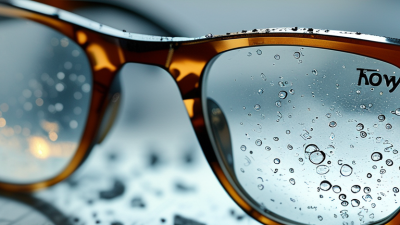
| Hydrophobic top layer | When included, this surface treatment helps water bead and shed from the lens. | Can make water spots and some smudges easier to wipe away. | Check whether it is included in the specific coating package; it is not implied by every use of “HMC.” |
| Oleophobic properties | An optional oil-repellent surface treatment can reduce the adherence of oily fingerprints. | May make routine cleaning easier, though fingerprints can still occur. | Confirm whether the coating includes an oil-repellent layer and how it should be cleaned. |
| UV protection | UV protection depends on the lens material and any UV-absorbing treatment, rather than on the HMC label alone. | The right specification can help limit transmission of ultraviolet radiation through the lens. | Check the lens’s stated UV protection separately, especially when UV performance is a priority. |
| Lens material and use | Coating adhesion, care needs, and optical performance can vary with lens material, prescription, and use conditions. | Matching the coating to daily activities can support comfort and practical maintenance. | Consider screen use, night driving, outdoor exposure, cleaning habits, and the lens material recommended for your prescription. |
| Care and durability | Coating performance can be affected by abrasive cleaning, high heat, and harsh chemicals. | Proper care helps preserve the coating’s appearance and function over time. | Rinse off grit before wiping, use lens-safe cleaner, and avoid paper products or leaving lenses in high-heat locations. |
Note: “HMC” is not a single globally standardized coating specification. Confirm the included layers, performance claims, care guidance, and warranty for the particular lenses.