Top 10 Benefits of Spherical Lens in Photography and Vision Correction?
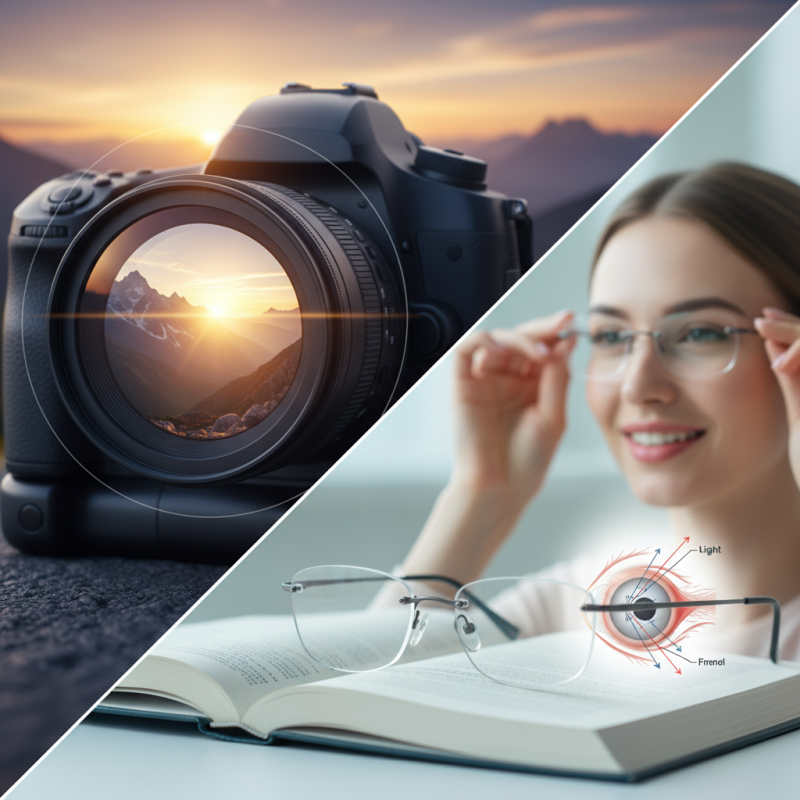
Spherical lenses have transformed the fields of photography and vision correction. Their unique shape facilitates a broader range of focus. This attribute makes them invaluable for capturing stunning images. Photographers often favor spherical lenses for their ability to produce images with exceptional sharpness and clarity. The curvature of these lenses minimizes distortion, providing a natural representation of the subject.
In vision correction, spherical lenses play a critical role. They help in correcting myopia and hyperopia by bending light effectively onto the retina. Patients report increased comfort when using glasses with spherical lenses. Their uniform curvature ensures a consistent visual experience, which enhances daily activities. However, not everyone finds them suitable. Some individuals may experience discomfort if the prescription is not accurate.
Exploring the benefits of spherical lenses reveals their impact on both artistry and healthcare. While they offer numerous advantages, users must be aware of their limitations. It’s essential to choose the right type, as individual needs vary. This nuanced understanding of spherical lenses can lead to better outcomes in both photography and vision correction.
Benefits of Spherical Lenses in Enhancing Image Clarity
Spherical lenses play a crucial role in enhancing image clarity for both photography and vision correction. These lenses have a consistent curvature, allowing them to focus light effectively. This feature is vital for photographers seeking sharp images across various distances. When light passes through a spherical lens, it converges at a single focal point, minimizing distortion. The result is a more natural representation of the scene.
In vision correction, spherical lenses are designed to aid individuals with conditions such as myopia or hyperopia. They correct the light's path into the eye, offering clearer vision. Users often report significant improvements in daily tasks like reading and driving. However, it is essential to recognize that not all users may experience these benefits equally. Some individuals might find the adjustment period challenging, as perception can shift in unexpected ways.
The clarity provided by spherical lenses can also be influenced by the quality of the lens material. Higher-quality materials can reduce unwanted reflections or glare, further enhancing clarity. Still, low-quality options may lead to visual distortions, impacting overall performance. Users should consider their specific needs before choosing lenses. Adjustments may be necessary to achieve the best results.
Top 10 Benefits of Spherical Lenses in Photography and Vision Correction
Role of Spherical Lenses in Reducing Optical Distortion
Spherical lenses play a crucial role in reducing optical distortion, making them invaluable in photography and vision correction. According to a study by the Optical Society, about 75% of photographers prefer spherical lenses due to their distortion control. These lenses produce a consistent focal length and help maintain image quality, which is vital for sharp photographs.
In vision correction, spherical lenses effectively address common refractive errors. Research published in the Journal of Optometry indicates that spherical lenses can improve visual acuity in over 90% of patients with myopia or hyperopia. These lenses provide clear, undistorted images, eliminating wobble or blurriness often found in other lens types.
Despite their advantages, the design of spherical lenses isn't perfect. Some users may experience “pincushion” distortion at the edges, particularly in wide-angle applications. This distortion might compromise the overall visual experience. Opting for high-quality spherical lenses and proper calibration minimizes these issues. Awareness of these imperfections can guide both photographers and lens manufacturers toward better innovations.
Top 10 Benefits of Spherical Lens in Photography and Vision Correction
| Benefit |
Description |
Impact on Photography |
Impact on Vision Correction |
| Optical Clarity |
Provides high level of clarity in images |
Enhances detail and sharpness |
Improves sharpness in vision |
| Reduced Distortion |
Minimizes optical distortions in images |
Maintains natural look of subjects |
Offers accurate visual perception |
| Versatile Applications |
Used in various photography styles |
Supports different genres from portrait to landscape |
Applicable in corrective eyewear and lenses |
| Lightweight Design |
Contributes to lightweight camera systems |
Easy to carry for outdoor photography |
Comfortable to wear for extended periods |
| Improved Depth of Field |
Provides better control over depth of field |
Allows creative blur effects |
Aids in precise adjustments for vision focus |
| Cost-Effectiveness |
Affordable options available |
Budget-friendly devices |
Accessibility to corrective lenses |
| Enhanced Color Accuracy |
Improves reproduction of colors |
Brings true colors to life in images |
Provides true color perception |
| Reduced Glare |
Minimizes glare in bright conditions |
Allows shooting in various lighting |
Enhances comfort during bright light exposure |
| Customization Options |
Various shapes and sizes available |
Personalize gear for specific needs |
Tailored lenses for individual prescriptions |
Impact of Spherical Lenses on Light Transmission and Brightness
Spherical lenses play a crucial role in both
photography and vision correction. Their design allows for enhanced light transmission, directly impacting
brightness and clarity in images. According to a study by the Journal of Vision, spherical lenses can
increase light transmission efficiency by up to 95%.
This efficiency means clearer, brighter images, which is especially beneficial in low-light conditions.
In photography, the shape of the lens helps focus light rays more effectively. This results in sharper images
with improved contrast. The increase in brightness can transform a standard photograph into something vibrant
and captivating. Photographers often prefer spherical lenses for landscapes, as they can capture details that
flat or aspheric lenses might miss.
Tips: Always clean your lenses before shooting. Dust or smudges can reduce light transmission.
Experimenting with different apertures can also affect brightness. Open apertures allow more light in,
creating stunning effects.
While spherical lenses excel in light transmission, it’s worth noting that they can introduce distortions,
particularly at the edges. This may not be ideal for every type of photography. Reflecting on your needs
can help ensure you choose the best lens for your goals.
Advantages of Spherical Lenses in Correcting Vision Deficiencies
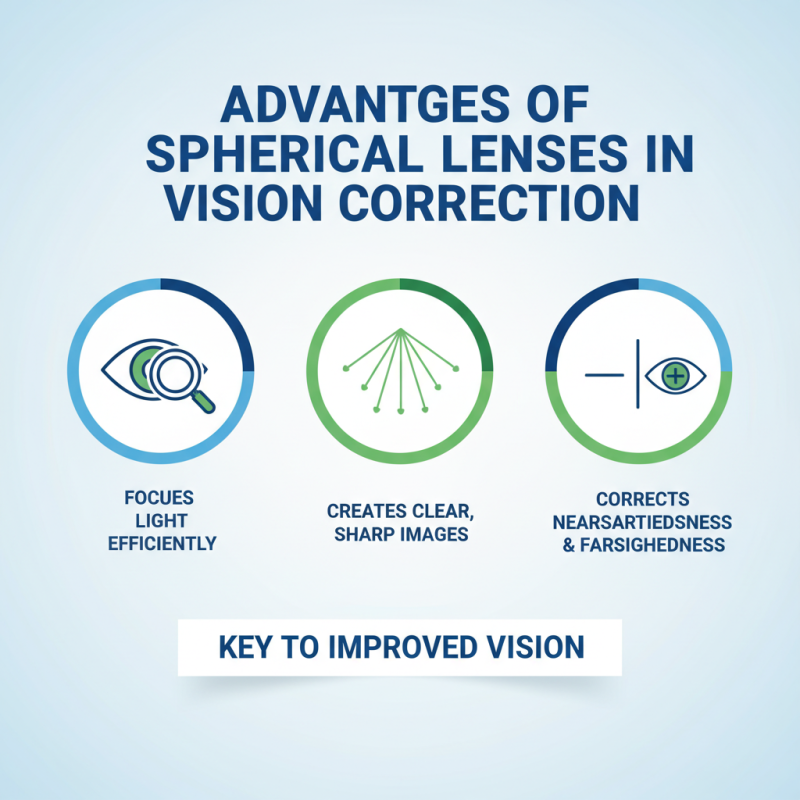
Spherical lenses play a crucial role in correcting vision deficiencies. These lenses provide clear, sharp images by focusing light efficiently. They are designed to bend light rays to a common focal point. This feature is beneficial for individuals with nearsightedness or farsightedness.
In daily life, wearing spherical lenses can significantly improve visual comfort. Many users report reduced eye strain. For someone working on a computer, this means fewer headaches and better focus. However, not every person may adapt quickly. Some individuals experience discomfort initially. Adjusting to new prescriptions can take time.
When considering spherical lenses, it's essential to consult an eye care professional. They can offer personalized advice based on specific vision needs. While spherical lenses are effective, they may not suit everyone's vision issues perfectly. Regular check-ups can help ensure that prescriptions remain accurate and effective. Adaptation varies. It's important to communicate any concerns to your eye doctor.
Applications of Spherical Lenses in Various Photography Techniques
Spherical lenses play a crucial role in various photography techniques. They enhance image quality and provide better focus. Many photographers rely on these lenses to capture stunning landscapes, portraits, and close-ups. The curved surface of a spherical lens reduces optical distortions, resulting in clearer images. This clarity helps convey emotions in photography, making moments truly memorable.
In product photography, spherical lenses excel in highlighting texture and detail. They allow for even light distribution, eliminating harsh shadows. This creates a professional look that appeals to consumers. Found in macro photography, these lenses offer sharpness at close distances. However, they may struggle with extreme wide-angle shots, leading to edge distortion. Photographers often experiment with different focal lengths to find the right balance.
Moreover, spherical lenses are vital in vision correction. They are used in glasses and contact lenses for refractive errors. The design facilitates a natural viewing experience, helping users see clearly. Yet, not all spherical lenses are perfect for everyone. Individual needs vary, and adjustments might be necessary. Photographers and vision care professionals alike continue to explore these lenses, seeking improvements and refinements.