
Leave Your Message

10 Best High Index Lenses for Glasses in 2026

A strong prescription can leave thick lens edges visible beyond a frame’s rim. High Index Lenses bend light more efficiently than standard materials, allowing many prescriptions to be made thinner. But “thinner” does not always mean clearer, lighter, or more comfortable.

The World Health Organization’s World Report on Vision estimates that at least 2.2 billion people worldwide have near or distance vision impairment. That figure is not a measure of demand for high-index eyewear. It does show why practical vision correction matters. For this guide, we compare index, lens weight, glare control, frame compatibility, and everyday comfort—not just product claims.

Optometrist Dr. Gary Heiting explains the core principle: “High-index lenses are made of a special plastic that refracts light more efficiently than regular plastic lenses.” Material choice still matters. A high index can reduce edge thickness, yet lens design, prescription strength, and frame shape affect the result. Reflections may also be more noticeable without suitable coatings.

Small details count. A lens edge that sits neatly inside a frame can look cleaner; a poorly matched frame can undo some of that benefit. Still, thinner is not automatically better. This ranking examines ten options for 2026, with attention to trade-offs, fit, and value. Use it as a starting point, then confirm your prescription and lens design with a qualified eye-care professional.
10 Best High Index Lenses for Glasses in 2026

How High-Index Lenses Work and Who Benefits from Them

High-index lenses bend light more strongly than standard plastic lenses. This lets manufacturers correct the same prescription with less material. Common refractive indices include 1.60, 1.67, and 1.74. The difference is most visible at the edges of strong minus prescriptions, or the center of strong plus prescriptions. That matters. The Vision Council’s 2023 Consumer inSights report estimated that 76% of U.S. adults use some form of vision correction, but not everyone needs thinner lenses. Prescription strength, frame size, and lens design all affect the final thickness.

People with stronger prescriptions often benefit most, especially when choosing smaller frames that keep lens edges closer to the eyes. A qualified optician can compare thickness estimates for your prescription and frame before ordering. High index is not magic. Some materials have lower Abbe values, which may make colored fringes more noticeable near the edges of vision. They can also reflect more light, so an anti-reflective treatment may improve comfort. The Vision Council’s 2024 Focused inSights research highlights eyewear fit and comfort as consumer considerations; personal comfort still varies. I would not choose by index alone. Ask to see the material, frame, and coating trade-offs together.

High-Index Lens Options for Glasses

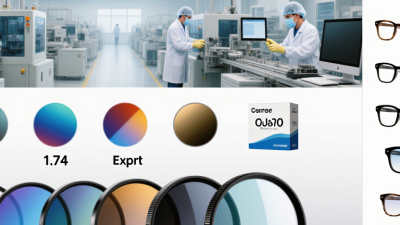
Representative refractive-index values show how common lens options compare. A higher index bends light more, which can allow a thinner lens for the same prescription.

Lens thickness also depends on prescription strength, lens design, and frame size. Actual refractive-index values may vary by lens material.

What to Consider When Comparing High-Index Lenses

When comparing high-index lenses, look beyond the index number. A higher index can make a lens thinner, but the final edge thickness also depends on prescription strength, frame size, and how the lenses are centered. Professional ophthalmic material data tables commonly place 1.67 materials near an Abbe value of 32, while 1.74 materials are around 33; standard 1.50 plastic is about 58. Abbe value describes how much color fringing a material may produce. The figures vary by formulation, and a small difference on paper may not feel obvious in daily wear. Still, it is worth asking your optician to explain the trade-off.

Fit matters in real life. A compact, round frame can reduce visible lens edges more effectively than a large rectangular frame, even with the same prescription. Ask for an estimated finished thickness, not just a material recommendation. Also compare scratch-resistant coatings, reflections, UV protection, and cleaning instructions; these details affect comfort and maintenance. Higher-index lenses often reflect more light, so an anti-reflective coating may be useful. It is not magic. If you have a strong prescription, a careful frame adjustment and accurate measurements can matter as much as choosing 1.74 over 1.67. The best choice is sometimes less dramatic than the product label suggests.

The 10 Best High-Index Lenses for Glasses in 2026

High-index lenses reduce edge thickness by bending light more efficiently than standard plastic. The right choice depends on prescription strength, frame size, and how you use your glasses. Ten practical options for 2026 include: 1) 1.60 single-vision, 2) 1.60 aspheric, 3) 1.60 photochromic, 4) 1.60 polarized sun, 5) 1.67 single-vision, 6) 1.67 aspheric, 7) 1.67 progressive, 8) 1.67 photochromic, 9) 1.74 single-vision, and 10) 1.74 aspheric lenses. Availability varies by prescription and lens provider.

For moderate prescriptions, 1.60 or 1.67 lenses may balance thinness, cost, and everyday comfort. Stronger prescriptions often benefit more from 1.67 or 1.74, especially in smaller frames. Still, the highest index is not automatically the best. It can reduce thickness, but may show more reflections without a suitable anti-reflective coating. Ask an optician to compare your prescription in the actual frame you plan to wear.

Frame details matter. A narrow, well-centered frame can make edges look less prominent than a large frame with the same lenses. Aspheric designs may also help reduce bulging and magnification. Honestly, online thickness estimates can be a little off; lens shape and fitting measurements change the result. Check material suitability, UV protection for sun lenses, and coating options before choosing.

10 Best High-Index Lenses for Glasses in 2026

Rank Lens option Refractive index Typical Abbe value Best suited for Key advantage Consideration
1 Aspheric high-index lens 1.67 About 31–32 Moderate-to-strong prescriptions Often gives a thinner profile than standard-index lenses, with a flatter appearance than a comparable spherical design. Peripheral color fringes may be more noticeable than with materials that have a higher Abbe value.
2 Aspheric ultra-high-index lens 1.74 About 32–34 Strong prescriptions where lens edge thickness is a priority Among the thinnest commonly available clear spectacle-lens materials. Usually costs more; frame choice and accurate fitting still affect the finished thickness and appearance.
3 Aspheric high-index lens 1.60 About 40–42 Mild-to-moderate prescriptions Balances a slimmer profile with a higher Abbe value than many 1.67 and 1.74 materials. May not reduce thickness as much as 1.67 or 1.74 for a strong prescription.
4 Atoric high-index lens 1.67 About 31–32 Prescriptions with notable astigmatism Atoric designs can account for different powers across the lens and may improve off-center clarity. Design availability depends on the prescription and lens provider; precise measurements are important.
5 Atoric ultra-high-index lens 1.74 About 32–34 Strong prescriptions with astigmatism Combines a thin-material option with a design intended for prescriptions that vary by lens meridian. Can be a higher-cost option, and the best result depends on frame fit and lens centration.
6 High-index lens with premium anti-reflective coating 1.67 About 31–32 Everyday wear, screen use, and night driving Anti-reflective coatings reduce surface reflections and can improve visual comfort and lens appearance. The coating does not change the lens material’s refractive index or make the lens thinner.
7 Ultra-high-index lens with anti-reflective coating 1.74 About 32–34 Strong prescriptions where reduced edge thickness and fewer reflections are desired Pairs a very high-index material with a coating that reduces reflections from lens surfaces. Coating quality and scratch resistance vary; follow the manufacturer’s cleaning instructions.
8 High-index photochromic lens Typically 1.60 or 1.67 About 40–42 at 1.60; 31–32 at 1.67 Wearers who move between indoor and outdoor settings Photochromic treatment darkens in response to UV exposure and fades indoors. Darkening can be limited behind some vehicle windshields; availability varies by material and prescription.
9 High-index polarized sun lens Typically 1.60 or 1.67 About 40–42 at 1.60; 31–32 at 1.67 Outdoor use around water, roads, or other reflective surfaces Polarization reduces glare from many horizontal reflective surfaces. Polarization is a sun-lens feature, not a substitute for checking UV protection or prescription compatibility.
10 High-index lens with scratch-resistant and anti-reflective treatments 1.60, 1.67, or 1.74 Varies by material: about 32–42 Daily wearers seeking a practical combination of a thinner lens and easier maintenance Combines a high-index material with treatments designed to improve surface durability and reduce reflections. No lens coating is scratch-proof; clean lenses with appropriate products and a microfiber cloth.

Abbe values are approximate typical ranges and can vary by material formulation and lens design. The right choice depends on prescription, frame size and shape, fitting measurements, budget, and visual needs. Confirm exact specifications and availability with an eye-care professional.

How Materials and Coatings Affect Lens Performance

High-index materials bend light more strongly, so many prescriptions can use thinner lenses. But index alone does not determine finished thickness; prescription strength, frame size, and lens design matter too. Trade-offs are real.

Some higher-index plastics have lower Abbe values, which can make colored fringes more noticeable near lens edges. Not everyone notices them, and precise measurements and fitting can help.

Coatings affect what you see and how easily lenses stay clean. An anti-reflective coating reduces reflections from indoor lights, screens, and headlights.

Hard coatings help resist everyday scratches, but no lens is scratch-proof.

Water- and oil-repellent layers make smudges easier to wipe away; they do not eliminate cleaning.

Ask which material and coatings suit your prescription, frame, and daily routine. A strong prescription in a small frame may need a different choice than a mild prescription in a large one. Check whether UV protection is included, rather than assuming every lens provides the same coverage.

I would not choose by index number alone. The clearest option on paper may still feel different at the edges, so comfort after fitting deserves attention.

How to Choose and Care for High-Index Lenses

Choosing high-index lenses starts with your prescription, not the index number alone. A qualified optician can compare lens thickness, frame size, and where your pupils sit within the lenses. Smaller, well-centered frames often reduce visible edge thickness, especially for stronger prescriptions. Ask whether the proposed lens design suits your prescription and daily tasks. Higher-index materials may reflect more light, so an anti-reflective coating can improve comfort and appearance. Still, the thinnest option is not automatically the best value. The difference may be modest in some prescriptions.

Care affects how long your lenses stay clear. Rinse them with lukewarm water before wiping away dust; rubbing dry grit can leave fine scratches. Use a clean microfiber cloth, and avoid paper towels, clothing, or household cleaners. They can damage coatings. At night, place glasses in a hard case rather than on a bedside table, where lenses may face down. If smudges persist, ask your optician how to clean your specific coating. Small habits matter. One detail is easy to overlook: high-index lenses can feel different in a frame, so have the fit checked after collection.