What are Transition Lenses and How Do They Work?
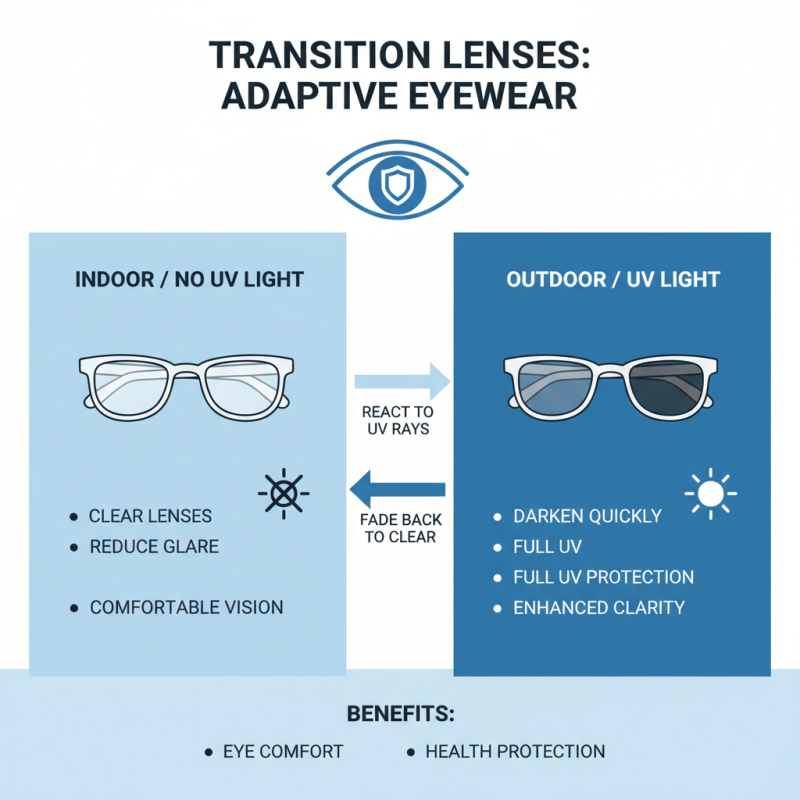
Transition Lenses are a revolutionary optical innovation. These lenses adapt to changing light conditions, effectively shielding your eyes from harmful UV rays. When exposed to sunlight, Transition Lenses darken. Inside, they are clear. This functionality provides comfort and protection in various environments.
The technology behind Transition Lenses involves special photochromic materials. These materials respond to UV light, causing the lenses to darken. However, not every lens adjusts perfectly. Some users may find them slow to change. This inconsistency can be a source of frustration for wearers.
Moreover, Transition Lenses may not provide optimal performance in every situation. Indoor lighting can sometimes hinder their effectiveness. Users might feel disappointed when looking for instant relief from glare. Ultimately, understanding how Transition Lenses work is essential for making informed choices. Exploring their benefits and limitations can help users enhance their vision experience.

What Are Transition Lenses?
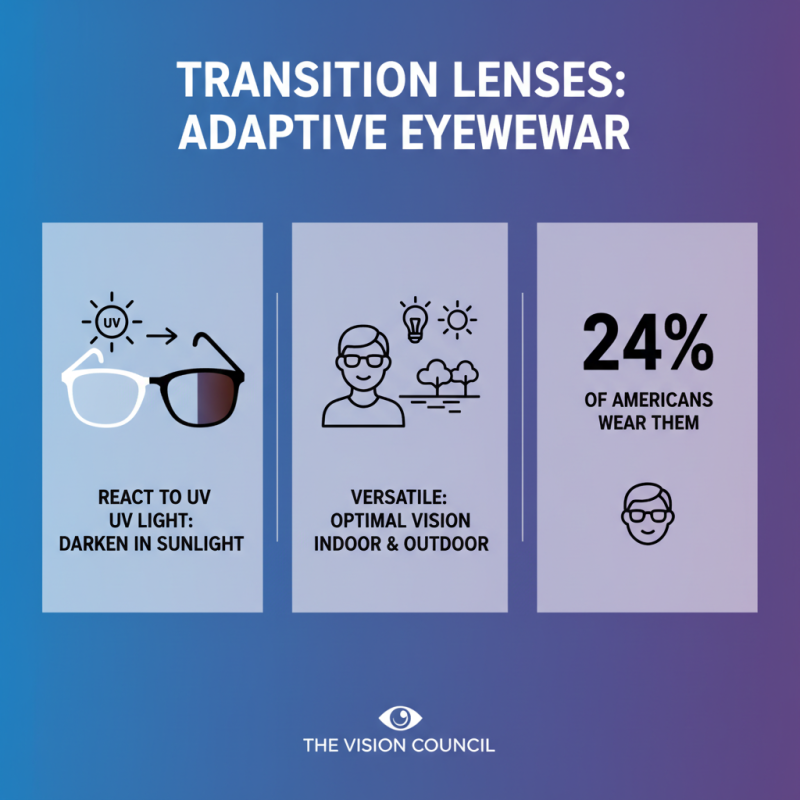
Transition lenses, also known as photochromic lenses, are a revolutionary eyewear option. They darken in response to UV light. This unique quality makes them versatile for various lighting conditions. According to a report by the Vision Council, approximately 24% of Americans wear such lenses.
These lenses work by a chemical process. The molecules in the lens change structure when exposed to UV rays. This reaction creates the darkening effect. When indoors or in low light, the lenses return to their clear state. A study revealed that 30% of lens wearers find this feature particularly useful for outdoor activities. However, not everyone finds them effective. Some users report slow activation times or incomplete darkening.
There are considerations to make. Transition lenses may not darken sufficiently in cars, due to UV protection by glass. Additionally, a significant portion of users has experienced issues with color perception. This challenges the notion that they are perfect for all situations. While the convenience is enticing, the effectiveness may vary based on individual preferences and daily environments.
The Science Behind Transition Lenses
Transition lenses are a remarkable innovation in eyewear. They adjust to light changes, darkening outdoors and clearing up indoors. This adaptability enhances user comfort. But how exactly do they work?
The science behind transition lenses hinges on a special coating. This coating contains photochromic molecules. When exposed to UV light, these molecules react and change shape, resulting in lens darkening. Conversely, they return to a clear state in absence of UV rays. It’s a fascinating interplay of chemistry and physics that makes daily eyewear versatile.
Sometimes, these lenses may not respond as expected. In certain environments, like in cars, UV light exposure is limited. Hence, the lenses might not darken as much. Users might feel frustrated by this inconsistency. Understanding their limitations is crucial for optimal use. Transition lenses serve a purpose, but they are not always foolproof. Adjusting expectations can lead to a better experience.
What are Transition Lenses and How Do They Work? - The Science Behind Transition Lenses
| Feature |
Description |
Benefits |
| Photochromic Technology |
Transition lenses darken in response to UV light exposure and return to clear indoors. |
Convenience of one pair of glasses for indoor and outdoor environments. |
| Speed of Transition |
Time taken to darken or lighten varies based on temperature and UV intensity. |
Faster adaptation to changing light conditions improves visual comfort. |
| UV Protection |
Provides additional protection against harmful UV rays. |
Reduces the risk of eye damage from UV exposure. |
| Durability |
Coatings can scratch or wear off; however, many offer long-lasting protection. |
Reduced need for frequent replacements compared to regular lenses. |
| Appearance |
Available in various styles and colors to match personal tastes. |
Can enhance aesthetic appeal while providing function. |
How Transition Lenses Respond to UV Light
Transition lenses are a fascinating innovation in eyewear. They adjust their tint based on exposure to UV light. When you step outside on a sunny day, these lenses darken quickly. They react to the ultraviolet rays from the sun. This reaction helps protect your eyes from harmful light.
Inside, the lenses are clear. They provide optimal vision without any tint distortion. Once you go outdoors, the magic happens. The color change occurs almost instantly. It’s a seamless transition from indoors to the bright outdoor environment. However, not all lenses react the same way. Some might take longer to darken, and others may not fully clear inside.
The key to their functionality lies in photosensitive molecules. These molecules become activated by UV light. This process allows the lenses to darken effectively. However, on cloudy days, they might not change much. The response to UV light can differ among individuals too. Each person experiences it uniquely.
The Benefits of Using Transition Lenses
Transition lenses offer a unique solution for those who frequently move between indoor and outdoor environments. These lenses automatically darken in sunlight. When indoors, they return to a clear state. This ability eliminates the need for multiple pairs of glasses, which can be cumbersome. Imagine stepping outside on a bright day and feeling the shift in light. Your lenses adapt, providing instant protection from glare.
Using transition lenses brings several benefits. They filter out harmful UV rays, which is crucial for eye health. The convenience factor is undeniable; no need to change glasses. This adaptability makes them an ideal choice for active lifestyles. For many, these lenses also enhance visual comfort. However, not everyone finds the transition seamless, especially in extreme conditions. Some users may notice delays in lens adjustment, leading to moments of discomfort. Such experiences serve as reminders that while these lenses are innovative, they are not flawless. Adjusting expectations can help in enjoying their benefits more fully.
Benefits of Using Transition Lenses
Comparing Transition Lenses to Regular Prescription Glasses
Transition lenses are unique because they darken in sunlight and clear indoors. This feature offers convenience for wearers who move between different lighting environments. Regular prescription glasses, on the other hand, remain the same no matter the light condition. While they provide clear vision, they don't adapt like transition lenses do.
The performance of transition lenses can be inconsistent. Some people find they don’t darken enough. Others may even notice they take time to adjust when going from bright sunlight to indoors. Regular glasses, however, don't have this issue. They are reliable, but they require a separate pair of sunglasses for outdoor use.
While transition lenses offer versatility, they might not be perfect for everyone. Their ability to darken depends on the UV light exposure. This means they won’t turn dark inside a car, for example. Also, some users may feel discomfort when the glasses shift from dark to clear. These factors can lead to frustration, especially if one expects seamless switching between environments.