Top UV Protection Glasses for 2026 What to Look For?
In today’s sun-soaked world, UV protection glasses are more essential than ever. Experts recommend them for anyone venturing outdoors. Dr. Emily Carter, a leading eyewear specialist, emphasizes, “Choosing the right UV protection glasses is crucial for long-term eye health."
As we approach 2026, understanding what features to seek in UV protection glasses becomes paramount. These lenses do more than just shield against harmful rays; they enhance comfort, visibility, and overall eye well-being. The market is flooded with options, making it potentially confusing for consumers. It’s easy to get lost in marketing jargon, yet the fundamental product quality should always take precedence.
Investing in UV protection glasses is not just about style. It is about taking responsibility for your eye health. While fashion is appealing, effectiveness cannot be overlooked. Poor choices may lead to inadequate protection from UV damage. Therefore, it’s important to make informed decisions, as not all glasses labeled as "UV protection" provide the same level of safety. It's essential to reflect on what truly matters for our eyes.
Best Materials for UV Protection in Glasses
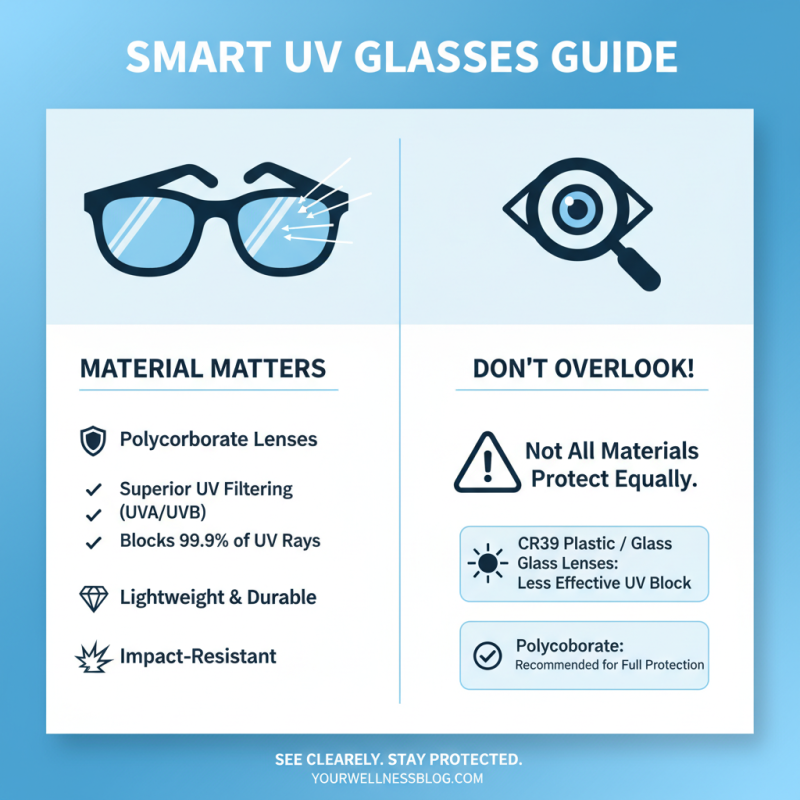
When choosing UV protection glasses, the materials make a significant difference. Look for polycarbonate lenses. They offer excellent UV filtering. This lightweight material is durable and impact-resistant. Many people overlook this essential factor. Not all materials provide the same level of protection.
Another material to consider is high-index plastic. This type is thinner and lighter than standard plastic lenses. It can be beneficial for those with stronger prescriptions. However, not all high-index plastics provide adequate UV protection. Some might prioritize aesthetics over functionality. This is a potential pitfall for buyers.
Also, examine lens coatings. Anti-reflective coatings can reduce glare and enhance clarity. Yet, poorly applied coatings may wear off quickly. Scratch-resistance is vital, too. It extends the lifespan of the glasses. It's important to balance protection, comfort, and style. People often overlook the importance of proper fit. Gathering more information can help in making informed choices.
Key Features to Consider When Choosing UV Protection Glasses
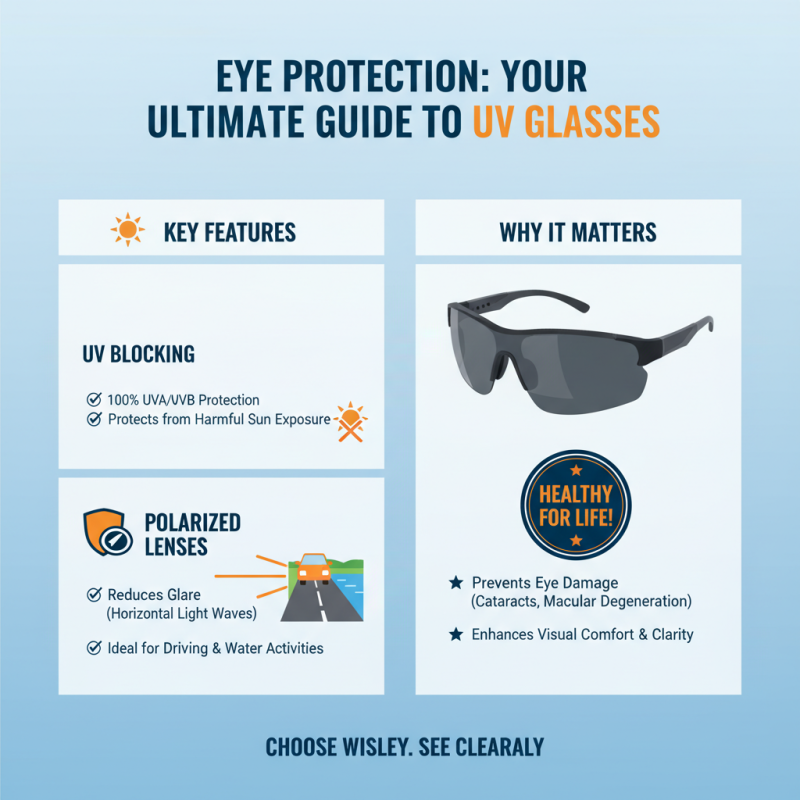
When choosing UV protection glasses, you should consider several key features. First, look for lenses that block 100% of UVA and UVB rays. This is crucial for protecting your eyes from harmful sun exposure. Polarized lenses can also reduce glare, making them ideal for outdoor activities. They filter out horizontal light waves, which is helpful when driving or near water.
Frame style matters too. Opt for wraparound designs to provide more coverage. This helps minimize UV rays entering from the sides. Comfort is essential; lightweight materials can enhance your experience. Adjustable nose pads and temple tips can improve fit, making them suitable for all-day wear.
Don't forget about lens colors. Darker lenses can reduce brightness, but they don't necessarily offer better UV protection. Consider options like amber or gray for a natural color perception. Reflect on your lifestyle and activities when selecting features. Assess how often you'll use them and in what conditions. A pair of glasses that looks good but lacks functionality may be a wasted investment.
Top Brands of UV Protection Glasses for 2026
In 2026, the demand for UV protection glasses will soar. According to industry reports, over 60% of consumers now prioritize UV protection in eyewear. This shift highlights the importance of choosing the right brand. The top brands will focus on effective UV filtration and durable materials. Many consumers overlook the impact of lens color on UV protection. Darker lenses do not always mean better protection.
When selecting UV protection glasses, check for compliance with ANSI Z80.3 standards. This ensures that the glasses provide adequate UV protection. Acceptable lenses block 99% of UV rays. Engage in user reviews and expert opinions to guide your choice. Verifying materials used in frames and lenses is essential. Some brands use lightweight, resilient materials that enhance comfort.
**Tips:** Always look for certifications. A reputable brand will have verifiable lab results. Remember, not all sunglasses offer equal protection. If unsure, consider polarized lenses. They reduce glare and improve visual clarity. Stay informed and choose wisely. Investing in quality UV protection glasses is vital. Your eyes deserve the best care possible.
Top UV Protection Glasses for 2026
| Feature |
Description |
UV Protection Level |
Lens Material |
Frame Material |
Weight (grams) |
Price Range (USD) |
| Polarization |
Reduces glare for clearer vision |
100% UVA/UVB |
Polycarbonate |
Plastic |
25 |
50-150 |
| Photochromic |
Adjusts tint based on light conditions |
100% UVA/UVB |
Glass |
Titanium |
30 |
100-250 |
| Scratch-Resistant |
Coating for durability |
99% UVA/UVB |
Polycarbonate |
Aluminum |
22 |
70-170 |
| Lightweight Design |
Enhances comfort for all-day wear |
100% UVA/UVB |
Nylon |
Plastic |
20 |
60-140 |
How to Determine UV Protection Levels in Glasses
When choosing UV protection glasses, understanding their UV protection levels is crucial. Look for glasses that specify UV460 or UV400 ratings. These ratings indicate the absorption of harmful ultraviolet rays. UV400 blocks all rays up to 400 nanometers, providing excellent protection. However, not all glasses with these ratings may be created equal.
Consider the lens material and color. Polycarbonate lenses often provide better impact resistance. Tinted lenses can enhance visibility in bright conditions but may not always block UV rays effectively. Always check for a label or certification that guarantees UV protection. Reading product descriptions can be helpful but, at times, misleading.
It's important to try on the glasses. Comfort matters significantly; uncomfortable glasses may lead you to avoid wearing them. Test how well they fit your face. Gaps can let in harmful rays. Reflect on your lifestyle too. Outdoor activities increase your exposure to UV rays. Choosing the right pair can make a big difference in your eye health.
Trends in UV Protection Technology for Eyewear in 2026
As we move into 2026, UV protection technology for eyewear is advancing rapidly. More consumers are seeking effective ways to shield their eyes from harmful UV rays. Enhanced coatings are becoming a standard feature. These coatings can block up to 99% of UV radiation. Additionally, photochromic lenses are gaining popularity. They automatically adjust to changing light conditions, offering optimal protection indoors and outdoors.
Tips: Look for lenses that filter both UVA and UVB rays. Gradual changes in technology mean not all glasses meet performance standards. Checking for certifications is crucial. Wear your sunglasses regularly, even on cloudy days. UV rays can penetrate clouds.
New innovations like polarized lenses improve visual clarity. They reduce glare from reflective surfaces. However, people should remember that tinted lenses do not always equate to UV protection. Some dark lenses lack essential coatings. Understanding these details can help buyers make informed choices. Evaluate each pair carefully before purchasing.
Top UV Protection Technologies in Eyewear for 2026
This chart illustrates the projected advancements in UV protection technologies for eyewear by 2026. As consumer awareness increases, manufacturers are innovating with new materials and coatings to enhance UV blocking capabilities.