What Are the Top Prescription Lens Types in 2026
Choosing glasses in 2026 means weighing more than style. Prescription Lenses can be designed for distance, reading, screen work, or several tasks at once. The best option depends on your prescription, daily routine, comfort, and budget—not on a trend alone.
This guide introduces the leading lens types, including single-vision, bifocal, and progressive lenses. It also considers options such as photochromic lenses, which darken outdoors, and blue-light-filtering lenses, whose benefits may depend on how and where you use screens. Each type solves a different problem. None is ideal for everyone.
Details matter. A delivery driver may value clear distance vision, while someone reading small print at a desk may need reliable near focus. Progressive lenses can cover multiple distances without a visible dividing line, but some wearers need time to adapt. That adjustment can be frustrating. It is worth discussing.
Lens material, coatings, and accurate measurements also affect everyday results. An optician or eye-care professional can explain which features suit your prescription and work habits. Ask about trade-offs, expected adaptation, and care instructions before choosing. This article offers a practical starting point, not a substitute for a current eye examination. Even familiar lens names can be confusing; the right choice should feel clear in your real routine.
What Prescription Lenses Are and How They Correct Vision
What Are the Top Prescription Lens Types in 2026
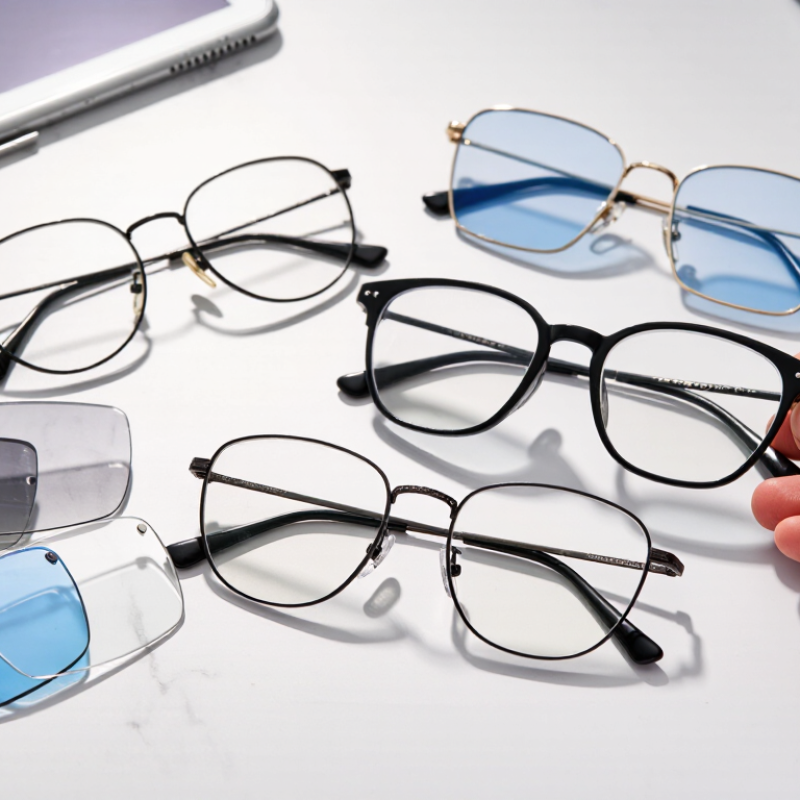
Prescription lenses are shaped to help focus light on the retina, the light-sensitive layer at the back of the eye. When light focuses in front of or behind the retina, vision may appear blurry. A prescription adjusts how the lens bends light. Small changes matter. Concave lenses commonly correct nearsightedness, while convex lenses help with farsightedness. Astigmatism may need a lens with different power across specific directions. Reading or multifocal lenses can address age-related difficulty focusing up close.
A prescription typically records lens power and, when needed, details for astigmatism or near vision. The right lens type depends on the prescription, daily tasks, and professional measurements—not just a label. Single-vision lenses correct one viewing distance; multifocal designs support more than one. Lens material and coatings can affect weight, thickness, and glare, but they do not replace accurate correction. Getting used to a new prescription can take time. If discomfort or blur persists, have the fit and prescription checked.
Tips: Bring your current prescription and describe when blur occurs, such as while reading small print or driving at dusk. Ask how long adjustment should take. Keep lenses clean with a suitable cloth, and avoid guessing at changes to your prescription.
Top Prescription Lens Types in 2026: What They Are and How They Correct Vision
Prescription lenses use carefully shaped surfaces and optical power to focus light onto the retina, helping correct nearsightedness, farsightedness, and astigmatism. This chart compares the approximate refractive indices of common lens materials and options.
A higher refractive index bends light more strongly and can allow a lens to be thinner for the same prescription. Actual lens thickness also depends on prescription strength, lens design, and frame shape. Values are typical approximations; the vertical axis starts at 1.45.
Which Single-Vision Lens Types Address Near, Far, and Screen Use
Single-vision lenses correct one main viewing distance, so the right type depends on where your eyes need help. Distance lenses are prescribed for far vision, such as reading street signs or seeing a presentation across a room. Near-vision lenses support close tasks like reading a menu or stitching. They may be worn only for close work, depending on the prescription and comfort.
Small detail: a page often sits about 35–40 centimetres away, but posture and arm length change that distance.
Screen use is less simple. A computer may sit roughly an arm’s length away, between typical reading and distance ranges. A single-vision intermediate lens can focus there and reduce the need to lean toward the monitor, but it may blur road signs or phone text.
Not a one-pair fix.
Some people use separate reading and screen glasses; others need a different prescription because of astigmatism or age-related focusing changes. An eye-care professional can measure your working distance and check the prescription, lens position, and fit. Bring your usual device if possible. It helps, though it is easy to forget.
How Multifocal Lenses Combine Multiple Vision Corrections
What Are the Top Prescription Lens Types in 2026
How Multifocal Lenses Combine Multiple Vision Corrections
Multifocal lenses place more than one prescription in a single lens, helping people see at different distances without changing glasses. Bifocals usually have separate areas for distance and near vision. Trifocals add an intermediate zone, useful for tasks such as checking a dashboard or computer screen. Progressive lenses blend these powers gradually, without visible dividing lines.
The transition can take practice. You may need to move your head slightly to find the clearest part of the lens, especially when reading or looking across a room. Some people notice peripheral blur at first, and not every design suits every prescription or daily routine. An optometrist can assess your vision, take fitting measurements, and discuss which lens layout matches your work and habits. The fit matters as much as the prescription. It is easy to overlook that.
Tips: Wear new lenses as advised, and allow time to adjust. Keep your head still while reading, then gently lower your gaze through the near-vision area. If discomfort or persistent blur continues, contact your eye-care professional for a review.
What Lens Materials and Coatings Offer in 2026
In 2026, lens material should match prescription strength, frame size, and daily wear—not just the thinnest option. The Vision Council’s 2024 Consumer inSights report found that roughly three-quarters of U.S. adults use vision correction, making comfort a practical concern for many wearers. Standard plastic suits many prescriptions; polycarbonate and Trivex are lighter, impact-resistant choices often considered for active use. Higher-index plastics can reduce edge thickness in stronger prescriptions, though they may cost more and show reflections more readily. Thin is not everything.
Coatings change how lenses perform. Anti-reflective coatings reduce distracting reflections from screens and night lights, while scratch-resistant coatings help limit everyday surface marks. UV protection matters outdoors; check that the chosen lenses provide it. A coating is not scratch-proof, and cleaning dry lenses can still leave fine marks. Small detail. Ask an eye-care professional to compare material, prescription, and frame measurements; comfort can vary even with similar lens specifications.
Tips: Clean lenses with water and a clean microfiber cloth. For stronger prescriptions, ask to see thickness estimates in your actual frame. A lens that looks sleek on paper may feel less balanced on your face.
How to Compare Prescription Lens Types for Your Needs
What Are the Top Prescription Lens Types in 2026
How to Compare Prescription Lens Types for Your Needs
Choosing lenses starts with how you use your eyes each day. Single-vision lenses correct one viewing distance, such as reading or driving. They can also suit people who spend long stretches at a computer. Bifocal lenses provide two viewing zones, while progressive lenses blend distance ranges without a visible dividing line. That smooth transition can take practice. Some people adjust quickly; others do not.
Compare more than the lens name. Tell your eye-care professional about your usual tasks, working distance, and any discomfort with your current glasses. A reader holding a book close needs different support from someone switching between road signs and a dashboard. Ask how lens design, prescription strength, and frame size may affect your view. Photochromic lenses darken outdoors, but their response can vary with conditions and may not replace dedicated sunglasses. No option is perfect for every routine.
Tips: Bring your current glasses and describe a typical day. Ask about adaptation time, lens care, and which options fit your prescription and budget. If a new pair feels persistently uncomfortable, arrange a professional fit check rather than assuming you simply need to endure it.