Top 10 Myopia Control Lenses for Effective Vision Management?
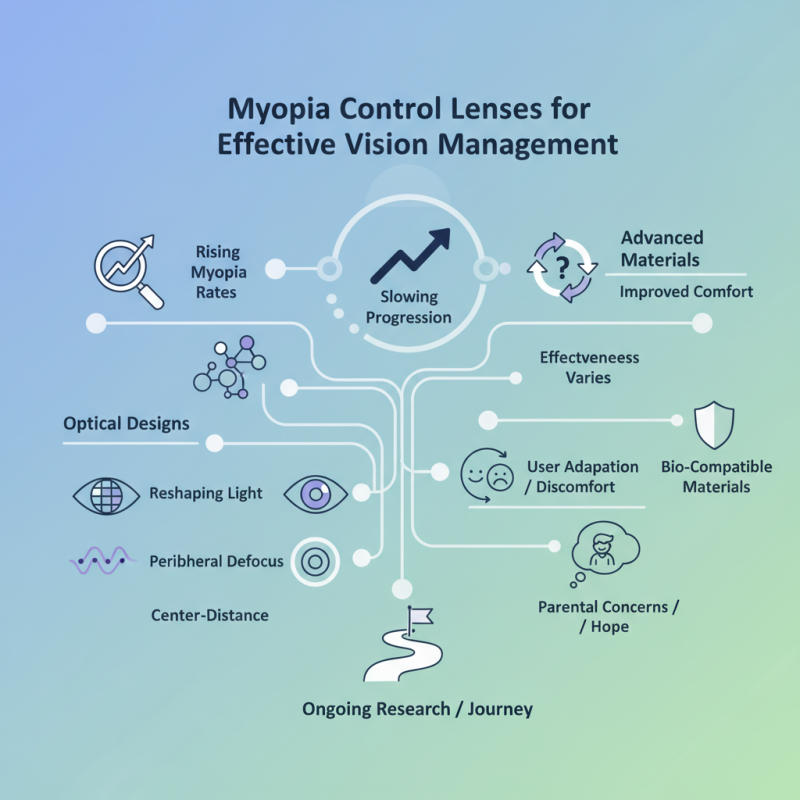
As myopia rates rise globally, finding effective solutions is crucial. One promising area of research is Myopia Control Lenses. These lenses aim to slow the progression of myopia in children and young adults. They offer a blend of comfort and functionality, making them an appealing choice for families concerned about vision health.
Different types of Myopia Control Lenses exist, each with unique features. Some lenses use special optical designs to reshape light as it enters the eye. Others incorporate unique materials that encourage eye health. However, the effectiveness of each type can vary significantly.
It's essential to recognize that no solution is perfect. Some users may experience discomfort when adjusting to new lenses. Parents might wonder if these lenses will truly help their children. Research continues, and the journey toward optimal myopia management is ongoing. Each step forward requires patience and reflection on individual needs.
Top 10 Myopia Control Lenses for Effective Vision Management
The prevalence of myopia is increasing worldwide. It is estimated that by 2050, half of the global population may be affected. Effective myopia management is crucial to prevent further vision complications. Utilizing specific myopia control lenses can significantly slow down the progression of this condition.
These lenses work by altering how light is focused on the retina. Studies indicate that myopia control lenses can reduce the increase in myopia by nearly 50%. This is vital for children, as early intervention is key. Regular eye exams and personalized fitting are essential for optimal results.
Tips: Choose lenses suited for daily use. Pair them with regular outdoor activities. Exposure to natural light may help reduce myopia development. Remember that consistency is important. Ensure that lenses are comfortable and fit well.
Not all lenses will work for every individual. Some might find their vision fluctuating. Continuous evaluation and professional guidance can help navigate these issues. It’s essential to discuss these experiences with an eye care professional for tailored recommendations.
Understanding Myopia and Its Impact on Vision Health
Myopia, commonly known as nearsightedness, is affecting millions globally. An estimated 30% of adults and 40% of children in the United States are myopic. The prevalence is rising. Experts predict half of the world's population will be myopic by 2050. This increase raises concerns about vision health.
Myopia can lead to severe complications, including retinal detachment and glaucoma. These conditions arise mainly due to the eye's elongation. This elongation causes light to focus incorrectly on the retina. Regular eye examinations can help detect myopia early. Early intervention is crucial for effective vision management.
Tips: Ensure children take regular breaks from screens. The 20-20-20 rule can help—every 20 minutes, look at something 20 feet away for 20 seconds. Encourage outdoor activities; studies show time spent outdoors can slow myopia progression. It's essential to proactively manage eye health rather than reactively address issues. Small changes in daily habits can lead to significant long-term benefits in vision quality.
Current Statistics on Myopia Prevalence and Trends in Children
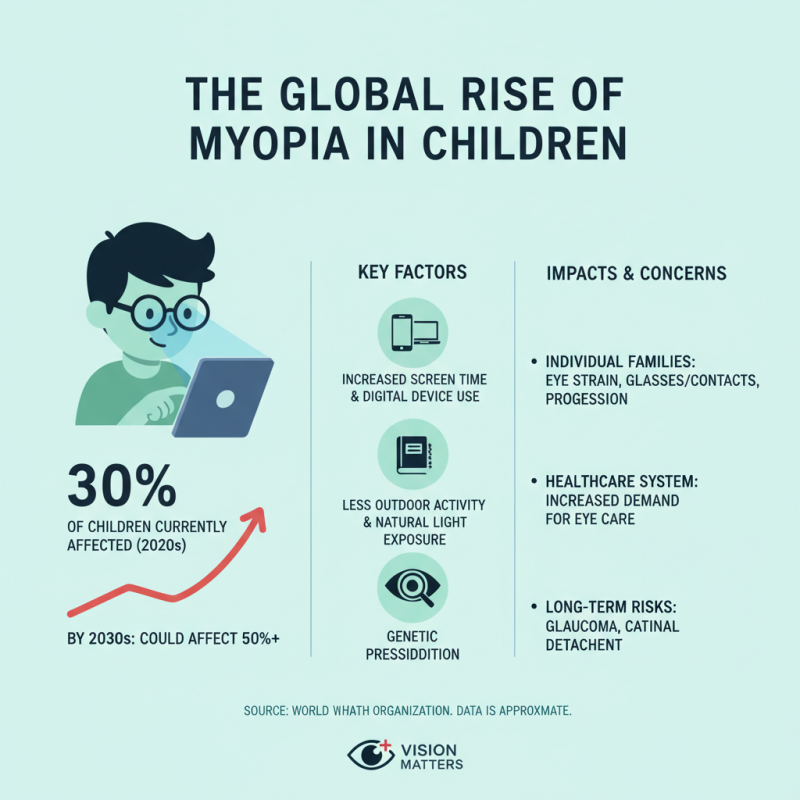
Myopia, or nearsightedness, is becoming more common among children. Recent studies show that approximately 30% of kids are affected. By the end of this decade, that number could rise significantly. This issue is alarming not only for individual families but also for the healthcare system. Eye strain from screens may contribute to the rise.
Many parents are unaware of the factors leading to this trend. Outdoor activities are dwindling. Kids spend hours indoors with screens instead of playing outside. This lack of natural light is a critical factor. Moreover, some children may not complain until their vision becomes severely impaired. Catching myopia early is essential but often overlooked.
While several lenses claim to help manage myopia progression, not all of them work effectively for every child. It's vital to understand what options exist. Unfortunately, many parents may rely on generic advice and miss specialized solutions. Personalized consultations with eye care professionals can prove invaluable. Parents should remain proactive and educate themselves on the best practices for vision management.
Mechanisms of Myopia Control: How Specialized Lenses Work
Myopia, or nearsightedness, is becoming increasingly common among children and teens. Specialized lenses are designed to help manage this condition effectively. These lenses use unique optical designs to alter how light enters the eye. This can slow the progression of myopia over time.
One prominent mechanism involves peripheral defocus, which occurs when the edges of the lens provide a slightly different focus. This helps to control the eye's growth. Another approach includes multifocal designs that offer different prescriptions in various lens zones. This promotes better vision at multiple distances while managing eye strain.
Yet, it's important to note that results may vary from person to person. Not every child responds the same way to these lenses. Regular follow-ups with an eye care professional are essential for adjusting prescriptions as needed. This allows for a personalized approach, ensuring the best outcomes in myopia management. Reflecting on these nuances can lead to better strategies for vision care.
Top 10 Myopia Control Lenses for Effective Vision Management
| Lens Type |
Mechanism of Action |
Age Range |
Efficacy (% of Myopia Progression Control) |
Recommended Duration of Use |
| Ortho-K Lenses |
Corneal reshaping |
8-40 years |
50-70% |
Nightly |
| Multifocal Lenses |
Diminishes peripheral defocus |
5-35 years |
40-60% |
Daily |
| Bifocal Lenses |
Reduces distance focus |
6-30 years |
30-50% |
Daily |
| Scleral Lenses |
Eliminates corneal aberrations |
All ages |
50-60% |
Daily |
| Atropine Eye Drops |
Reduces eye growth |
3-16 years |
60-90% |
Daily |
| Innovative Soft Lenses |
Methods of central and peripheral correction |
6-35 years |
45-55% |
Daily |
| Progressive Lenses |
Multi-distance vision correction |
35+ years |
20-40% |
Daily |
| Custom Soft Lenses |
Tailored for specific visual needs |
All ages |
Varies greatly |
Varies greatly |
| Hybrid Lenses |
Combines rigid gas permeable and soft lens technologies |
12+ years |
40-60% |
Daily |
| Lens Design with Peripheral Support |
Addresses peripheral myopia |
5-30 years |
30-50% |
Daily |
Comparative Analysis of the Top Myopia Control Lenses Available Today
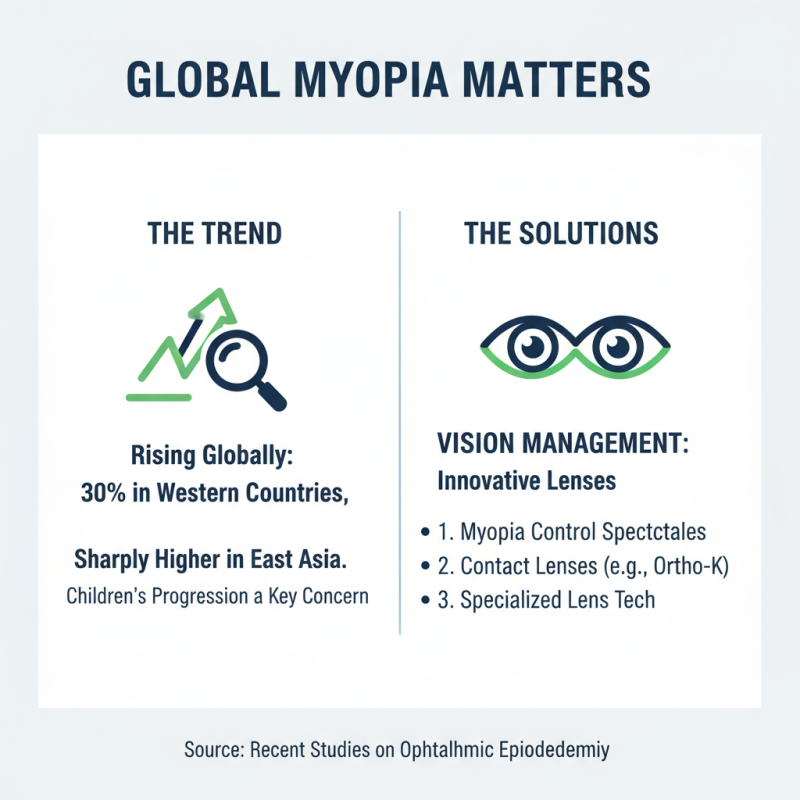
As myopia rates rise globally, effective vision management becomes increasingly crucial. Recent studies show that myopia affects nearly 30% of the population in Western countries, with figures rising sharply in East Asia. Parents are seeking ways to control the progression of their children’s myopia. Various lenses aim to address this issue through innovative technologies.
Myopia control lenses come in multiple designs. Some use specialized optics to challenge the eye's growth patterns. Others rely on advanced materials, offering better comfort and clarity. According to the American Academy of Optometry, these lenses can slow myopia progression by up to 50% in children. Yet, effectiveness can vary. It’s vital to consult with eye care professionals to find the best fit.
Tips: Regular eye exams are essential for early detection. Monitor any changes in your child’s vision. Encourage outdoor activities, as increased natural light exposure can help reduce myopia progression. Additionally, ensure that screen time is limited and breaks are taken to ease eye strain. These proactive steps can significantly impact eye health.
Conclusion
This article explores the critical topic of myopia control lenses, which play a vital role in managing vision health, particularly among children. With rising statistics indicating an increasing prevalence of myopia, understanding its implications is essential for both parents and healthcare professionals. The article delves into how specialized lenses function to mitigate the progression of myopia, along with a comparative analysis of the most effective options available today.
Additionally, the article highlights the latest innovations and research insights in myopia management, emphasizing future directions that could enhance treatment strategies. The focus on myopia control lenses underscores their significance in effective vision management, aiming to provide a clearer, healthier future for individuals at risk of myopia-related complications.