What are Photochromic Sunglasses and How Do They Work?
Photochromic sunglasses have gained traction in recent years due to their innovative technology. According to a report by Grand View Research, the global eyewear market is expected to reach $266.8 billion by 2026, and photochromic lenses will play a significant role in this growth. These sunglasses are designed to adapt to changing light conditions, providing convenience and comfort to users.
The lens darkens in sunlight and lightens indoors, making them ideal for outdoor activities. A study from the American Optometric Association noted that photochromic lenses can block up to 100% of harmful UV rays, enhancing eye protection. However, challenges remain. Some users may find that these lenses do not transition quickly enough or perform poorly in vehicles due to UV blocking by windshields.
As the technology improves, manufacturers must address these concerns to meet consumer needs. The effectiveness and reliability of photochromic sunglasses continue to improve. However, consumers should remain aware of the specific functionalities and limitations of their lenses. Balancing user experience and technological advancements is key in this rapidly evolving market.

Understanding Photochromic Sunglasses: Definition and Functionality
Photochromic sunglasses are designed to adapt to changing light conditions. When exposed to UV rays, the lenses darken quickly, providing protection against harmful sunlight. These lenses contain molecules that respond to UV radiation. According to a report by the American Optometric Association, around 30% of adults experience eye strain from bright sunlight. Photochromic lenses can reduce this issue significantly.
The technology behind photochromic lenses is fascinating. A chemical reaction occurs within the lens when exposed to UV light. This alters the molecular structure, causing the lenses to darken. Once indoors or away from direct sunlight, the lenses revert to their clear state. Research from the Vision Council indicates that nearly 70% of consumers are looking for multifunctional eyewear that can transition throughout the day.
Despite their advantages, some users find photochromic sunglasses less effective in vehicles. Windshields block significant UV rays, limiting the lenses' ability to transition. Additionally, varying quality among manufacturers can lead to inconsistent performance. Users must consider these factors when choosing their eyewear. Observing user reviews may offer insight into personal experiences and help in making informed choices.
The Science Behind Photochromic Lenses: Chemical Reactions Explained
Photochromic sunglasses are a fascinating example of how science enhances our daily lives. These lenses darken in response to UV light, making them adaptive to changing light conditions. The underlying mechanism involves a chemical reaction. When exposed to sunlight, specific molecules within the lens undergo a structural change. This reaction causes them to absorb more light, transforming the lenses from clear to tinted.
Research indicates that photochromic lenses can block up to 100% of UVA and UVB rays. An industry report from the American Optometric Association highlights that wearing proper eye protection can reduce the risk of cataracts by up to 50%. Despite these advancements, not all photochromic lenses react equally. Factors like temperature and light intensity can impact their performance. For instance, some lenses may not darken fully in cold conditions.
Understanding these imperfections in photochromic technology can help consumers make better choices. The variation in quality and effectiveness means careful selection is essential. Eye care professionals often recommend thorough assessments. Ultimately, knowing how these lenses work empowers users to protect their vision effectively.
Advantages of Using Photochromic Sunglasses in Daily Life
Photochromic sunglasses are an excellent choice for daily activities. They adapt to changing light conditions, providing convenience and protection. Studies show that around 50% of people prefer these versatile lenses. They become darker in bright sunlight, blocking harmful UV rays. This feature significantly reduces glare, making outdoor activities safer.
Using photochromic sunglasses offers notable advantages, especially for those who spend time outside. A report from the Vision Council states that 70% of UV damage occurs before age 18. Regular use of these sunglasses can help prevent long-term eye problems. They are also beneficial for driving, as they reduce eye strain and improve visibility.
However, there are considerations. Photochromic lenses may not darken indoors or in cars where UV light is limited. This limitation can lead to unpredictable performance. Users should be aware of their specific needs. In sum, photochromic sunglasses combine practicality and eye protection, making them a worthy investment.
What are Photochromic Sunglasses and How Do They Work? - Advantages of Using Photochromic Sunglasses in Daily Life
| Feature |
Description |
Advantages |
| UV Protection |
Blocks harmful UV rays that can damage the eyes. |
Reduces risk of cataracts and other eye disorders. |
| Adaptive Tint |
Darkens in bright sunlight and clears in low light. |
Provides comfort in varying lighting conditions. |
| Convenience |
Eliminates the need for switching between regular glasses and sunglasses. |
User-friendly for those with prescription lenses. |
| Style |
Available in various frames and designs. |
Fashionable and suitable for various occasions. |
| Durability |
Made from resilient materials that withstand daily wear. |
Long-lasting investment for eye protection. |
Differences Between Photochromic and Regular Sunglasses
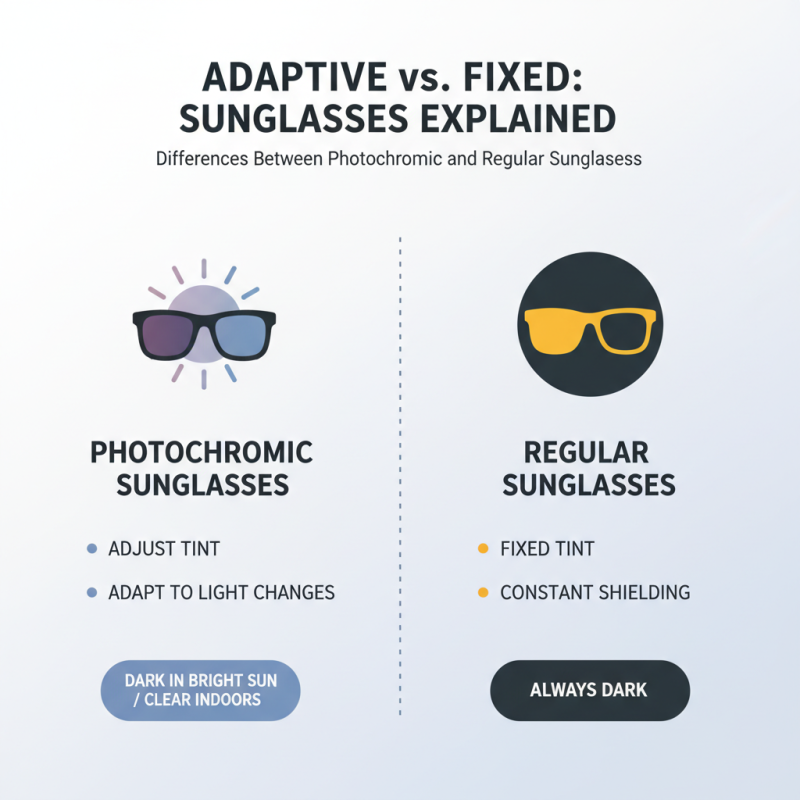
Photochromic sunglasses adjust their tint according to light levels. In bright sunlight, they darken to reduce glare, while indoors or in low light, they become clearer. This unique feature sets them apart from regular sunglasses, which come with a fixed tint. Regular sunglasses may shield your eyes, but they don’t adapt to changing conditions.
One significant difference is versatility. Photochromic lenses provide protection against UV rays and reduce eye strain. They are ideal for individuals transitioning between indoor and outdoor environments. Regular sunglasses only protect against bright light, lacking the adaptive capability.
Tips: When choosing sunglasses, consider your lifestyle. If you frequently move between indoors and outdoors, photochromic lenses may be beneficial. However, if you mostly drive or stay outdoors, regular sunglasses could suffice. Always check the UV protection levels. Not all sunglasses offer the same quality of protection, which is essential for your eye health.
Care and Maintenance Tips for Photochromic Sunglasses
Photochromic sunglasses are a great choice for outdoor activities. However, they require proper care to maintain their functionality. Here are some essential maintenance tips.
Regular cleaning is crucial. Use a microfiber cloth to wipe the lenses gently. Avoid harsh chemicals; they can damage the special coatings on the lenses. Also, rinse them with lukewarm water before cleaning to remove dirt. This prevents scratches during the cleaning process.
Store your sunglasses in a protective case when not in use. This protects them from dust and potential damage. Be aware that extreme temperatures can affect their performance. Leaving them in a hot car may cause them to malfunction.
Inspect your sunglasses often for scratches or damage. Small issues can worsen over time. If you notice any problems, seek professional repair services. Taking proactive steps ensures that your photochromic sunglasses last longer and provide the best protection for your eyes.