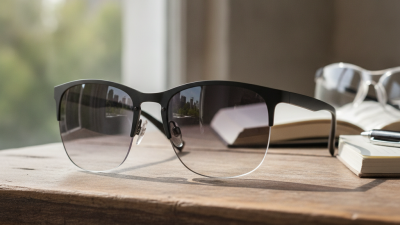

Choosing Photochromic Eyeglasses involves more than selecting lenses that darken outdoors. UV protection, activation speed, indoor clarity, prescription needs, coatings, frame fit, and lifestyle should guide the decision.
The World Health Organization identifies solar ultraviolet radiation as a risk factor for ocular damage, including cataracts. Meanwhile, market analyses from Grand View Research and Mordor Intelligence report continued growth in photochromic lens demand. Their estimates differ because market definitions and regional data vary. The data is imperfect. Still, the direction is clear: consumers want adaptable eyewear for changing light.
Optometrist Dr. Gary Heiting explains, “Photochromic lenses darken automatically when exposed to ultraviolet light.” That simple mechanism does not guarantee identical performance. A commuter inside a car may experience weaker activation because windshields filter much ultraviolet light. A cyclist may need faster darkening, stronger glare control, and dependable lens coverage. An office worker may value nearly clear indoor lenses more than maximum outdoor darkness.
This guide presents seven practical tips for choosing Photochromic Eyeglasses with greater confidence. It examines real-world conditions, not only product labels. Check the manufacturer’s testing details. Ask an optician about prescription limits and coating compatibility. Compare performance in bright streets, shaded sidewalks, and indoor spaces.
One limitation deserves attention. No photochromic lens replaces sensible sun protection in every environment. Snow, water, and high-altitude light can feel harsh. Your daily routine matters more than advertising language. Better choices begin with honest observation.
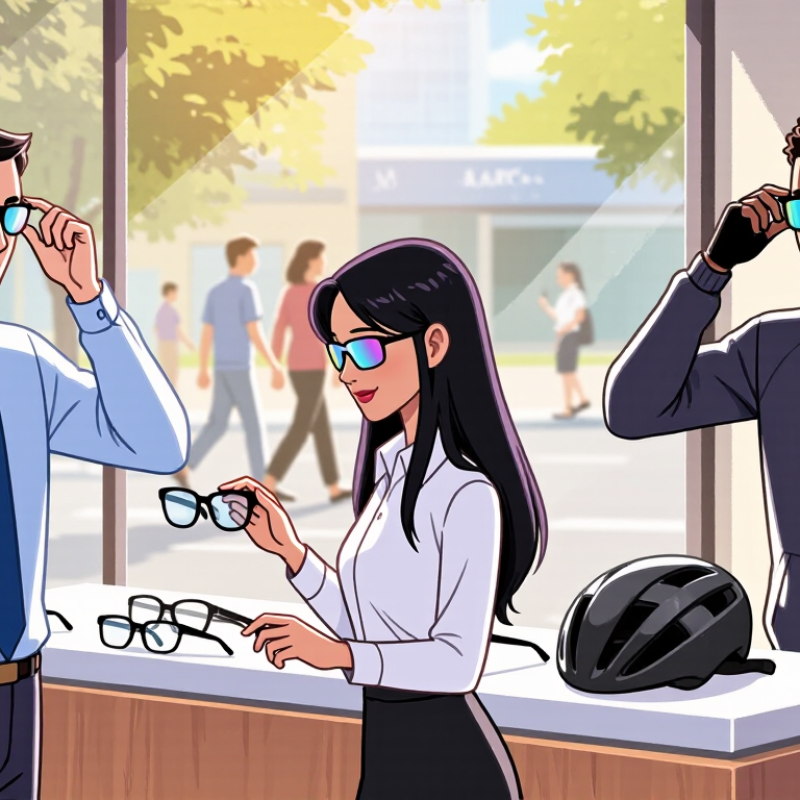
Understanding how photochromic eyeglasses work makes selection easier. Their lenses contain light-sensitive molecules that react mainly to ultraviolet radiation. Outdoors, they gradually darken; indoors, they become clearer.
A key detail is often missed: vehicle windshields can block much of the UV needed for activation. Therefore, photochromic lenses may stay relatively clear inside a car. The 2023 UV Index guidance from the World Health Organization confirms that UV intensity changes with location, season, altitude, and time.
Choose lenses tested for full UVA and UVB protection, not darkness alone. Look for compliance with ISO 8980-3 when evaluating optical performance.
Temperature also affects performance. Cold conditions may produce darker lenses, while heat can slow or reduce the visible tint. Check the lens’s activation range before choosing it for winter sports or hot climates.
Ask whether the lens works well behind glass. Ask about the fading time, too. It is rarely instant. I have found that people often expect sunglasses-level darkness everywhere, which is an imperfect assumption.
Prescription strength, frame coverage, anti-reflective treatment, and fitting accuracy also influence comfort. The Vision Council’s 2024 consumer research continues to identify sun protection as an important eyewear consideration, but personal habits still matter more than marketing claims. Test the lenses outdoors, inspect the edges for distortion, and confirm replacement and warranty terms with a qualified optical professional.
Choosing photochromic eyeglasses starts with your vision needs, not lens fashion. An updated eye examination can reveal refractive changes, astigmatism, dry eye, or sensitivity to glare. Ask the optometrist whether your prescription suits everyday viewing distances. Your work may require clear intermediate vision, while driving demands reliable distance clarity. Small differences matter.
Track how your eyes behave during a normal week. Do screens cause fatigue after lunch? Do bright pavements make you squint? Do you move between an office, a balcony, and public transport? Photochromic lenses can darken outdoors and return lighter indoors, but their speed and depth vary with temperature, light, and vehicle windows. If you spend much time driving, ask about performance behind the windshield instead of assuming outdoor activation will be enough. This detail is easy to overlook.
Match the lens choice to your routine. Frequent walkers may value glare control and broad outdoor coverage. Office workers may care more about quick indoor clearing and screen comfort. People with strong prescriptions should discuss lens thickness, frame size, and optical centering with a qualified professional. Children and older adults may need extra attention to fit, contrast, and safe visual transitions. Keep a backup pair for demanding days. One lens may not suit every situation. Your habits can change, so your first choice may need revision.
Photochromic eyeglasses should be judged by more than how dark they become. Lens performance depends on temperature, UV intensity, and surrounding glass. A lens may darken quickly outdoors but fade slowly inside a warm car. Cold weather can change its response too. Ask about measured activation and fading times, rather than vague “fast” claims. Small differences matter.
Lens material affects weight, impact resistance, optical clarity, and thickness. Polycarbonate lenses are light and impact-resistant, but some wearers notice more edge distortion. High-index materials can look thinner, yet they may cost more and require careful fitting. Trivex-style materials can offer a useful balance for active users. An optician should check the frame shape, prescription strength, and pupil position together. A poor fit can make a good lens feel disappointing.
UV protection is not the same as visible tint. Confirm that the lenses block both UVA and UVB radiation. Reliable product information should state the testing standard or protection range clearly. Car windows reduce some UV exposure, but side windows may provide less protection than the windshield. Photochromic lenses may also remain too light for bright driving conditions. I once assumed darker always meant safer, but that was an incomplete comparison. Ask for separate driving sunglasses if glare remains uncomfortable. Experiences differ.
Compare lens performance, materials, optical clarity, and UV protection before making a choice.
Higher-index lenses can be thinner, but they may have lower Abbe values and more visible chromatic aberration.
Choose lenses designed to block 99–100% of UVA and UVB radiation up to 400 nanometers.
CR-39 typically offers an Abbe value near 58, while polycarbonate is commonly near 30.
Polycarbonate is highly impact-resistant and is often selected for active lifestyles and safety applications.
Photochromic lenses darken outdoors under UV exposure and usually become lighter indoors, with speed affected by temperature and lens design.
Strong prescriptions may benefit from thinner high-index materials, while moderate prescriptions may prioritize clarity or impact resistance.
Anti-reflective, scratch-resistant, and hydrophobic coatings can improve everyday comfort, durability, and ease of cleaning.
The chart shows commonly specified refractive-index values for general lens materials. Actual values vary by formulation and prescription.
Choosing Photochromic Eyeglasses: The Right Frame, Fit, and Lens Design
Choosing photochromic eyeglasses starts with the frame, not the tint. A frame should sit level across your face without pressing your temples. Its bridge must rest securely on your nose, leaving no red marks after several minutes. The lenses should center over your pupils. This detail supports clearer vision and a more natural appearance. I once selected a frame because it looked excellent in a mirror. It later slipped while I was walking. That small mistake changed how I judge fit.
Lens design should match your daily routine and prescription. Single-vision lenses may suit one viewing distance, while progressive lenses require careful measurements and adjustment. Ask a qualified eye-care professional to check your pupillary distance, fitting height, and prescription strength. Small errors can cause eye strain. It happens.
Photochromic lenses usually darken outdoors under ultraviolet light, but many car windshields reduce that reaction. They may not replace dedicated sunglasses during strong driving conditions. Consider anti-reflective treatment if screens, headlights, or office lighting bother you. A thinner lens can also improve comfort in stronger prescriptions, but the best option depends on your prescription and frame size.
Test the glasses by looking down, turning your head, and smiling. The frame should remain stable. Bring them back for adjustment if one temple feels higher. Even careful choices need refinement. A professional fitting remains more reliable than judging comfort for thirty seconds in a shop.
| Tip | Selection Area | What to Look For | Practical Recommendation | Why It Matters | Quick Check Before Buying | Priority |
|---|---|---|---|---|---|---|
| 1 | Frame Material | Choose a frame material that balances durability, weight, flexibility, and resistance to everyday moisture. | Flexible acetate or lightweight, corrosion-resistant metal is suitable for regular daily wear. A lightweight frame can improve comfort during extended use. | Photochromic lenses may be used indoors and outdoors for long periods, so frame comfort and durability are important for consistent wear. | Hold the frame by the temples and gently flex them. It should feel resilient without creaking or permanently deforming. | High |
| 2 | Frame Fit and Measurements | Look for a frame width that aligns closely with the width of your face, with bridge and temple measurements that sit securely. | Use the frame’s eye size, bridge width, and temple length as a starting point. The frame should not slide, pinch, or leave excessive gaps at the sides. | A stable fit keeps the optical centers correctly positioned and helps reduce unwanted movement while walking or working. | Smile and move your head up and down. The frame should remain stable without pressing against the temples or cheeks. | High |
| 3 | Lens Size and Shape | Consider lens height, width, and curvature in relation to your prescription and visual needs. | Choose a lens shape that provides adequate vertical coverage while avoiding unnecessarily large lenses that may add weight. | Lens geometry affects peripheral vision, appearance, weight, and the thickness profile of prescription lenses. | Check that the pupils sit near the intended optical centers and that the lower frame edge does not obstruct normal downward vision. | High |
| 4 | Prescription Compatibility | Confirm that the selected lens design supports your prescription range and pupillary measurements. | Ask for monocular pupillary distance when available, especially for stronger prescriptions or larger frames. Consider high-index materials when reducing lens thickness is important. | Accurate measurements and suitable lens materials can improve visual clarity, balance, and cosmetic appearance. | Provide a current prescription and verify sphere, cylinder, axis, add power, and pupillary distance before ordering. | High |
| 5 | Photochromic Activation | Understand how the lenses respond to ultraviolet exposure, temperature, and the type of vehicle glass used. | Photochromic lenses generally darken outdoors under UV exposure. Many standard versions may not darken fully behind a windshield because automotive glass blocks much of the UV radiation. | Knowing the activation conditions prevents unrealistic expectations when moving between indoor spaces, open air, and vehicles. | Ask how the lens performs in a car and in cold weather. Darkening can be slower or different depending on temperature and exposure. | High |
| 6 | Lens Coatings and Protection | Evaluate anti-reflective, scratch-resistant, and ultraviolet-protection features according to your routine. | Consider anti-reflective treatment for night driving, computer use, and indoor lighting. Choose a durable hard coating for everyday handling, while remembering that no coating makes lenses scratch-proof. | Coatings can reduce reflections, improve cosmetic clarity, and help lenses withstand normal cleaning and handling. | Ask for written information about UV protection, coating care, cleaning restrictions, and warranty coverage. | Medium |
| 7 | Usage Pattern and Comfort | Match the frame and lens design to how often you switch between indoor and outdoor environments. | For frequent transitions, prioritize a secure fit, moderate frame weight, easy cleaning, and a lens design suited to your main activities. Keep separate sunglasses if you need strong darkness in a vehicle or during intense sunlight. | Photochromic lenses are convenient for changing light conditions, but they may not replace every specialized sun lens or sport-specific design. | Wear the frame for several minutes and check nose pressure, temple comfort, visual balance, and ease of adjustment. | High |
Choosing photochromic eyeglasses requires more than checking how quickly the lenses darken. Durability matters every day. Check whether the lenses resist scratches and whether the frame feels firm at the hinges. Test the nose pads and temple arms for movement. A lightweight frame is comfortable, but an overly flexible one may loosen sooner. Confirm that the lenses provide reliable ultraviolet protection through verified product information. Ask an optical professional about lens material and coating quality.
Activation speed also deserves attention. Some lenses change slowly in cold weather or inside a vehicle. That difference can affect comfort during commuting. My own mistake was judging performance only on a warm, sunny afternoon. Real use is less predictable. Try the glasses outdoors, then return indoors, if the store allows it. This reveals how smoothly the tint changes.
Maintenance strongly affects value. Rinse away dust with lukewarm water before wiping with a clean microfiber cloth. Avoid paper towels, hot water, and household cleaners. Keep the glasses in a hard case, especially in a bag with keys. Never leave them on a hot dashboard. Compare the purchase price with expected replacement costs, coating coverage, adjustment service, and warranty terms. A cheaper pair can become expensive after repeated repairs. A premium option is not automatically better, either. Inspect the details.