
Leave Your Message

How to Choose the Right Blue Block Lens for Your Needs?

Choosing the right Blue Block Lens can significantly impact your visual health. These specialized lenses filter harmful blue light emitted by screens. With our increasing screen time, the right lens becomes even more crucial.

When evaluating options, consider your daily activities. Are you often in front of a computer? Or maybe you’re frequently on your phone? Your needs will shape your choice.

However, navigating the options can be challenging. Each brand offers unique features and benefits. Some lenses may reduce glare, while others might enhance color perception. It's vital to reflect on what you truly require. Do you prioritize comfort over style? Finding a suitable Blue Block Lens involves thoughtful consideration, but the rewards are worth it.

How to Choose the Right Blue Block Lens for Your Needs?

Understanding Blue Block Lenses: What They Are and How They Work

How to Choose the Right Blue Block Lens for Your Needs?

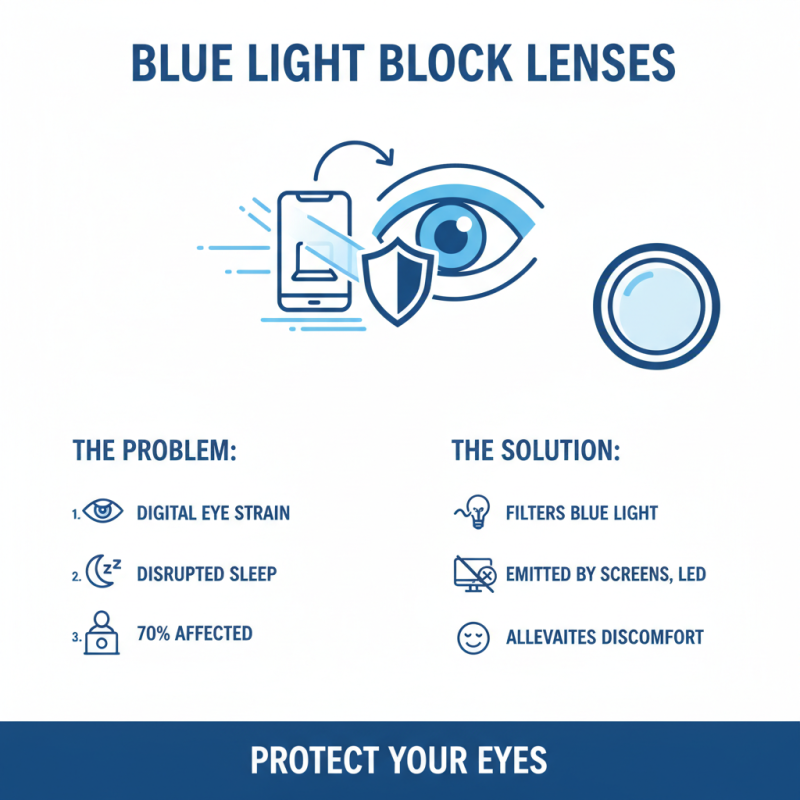
Blue block lenses are designed to filter out blue light. This light is emitted by screens and artificial lighting. Prolonged exposure to blue light can contribute to digital eye strain and disrupt sleep patterns. Studies suggest that around 70% of people experience eye discomfort from screens. This lens technology aims to alleviate those symptoms.

Understanding how blue block lenses function is essential. They use a special coating or material that absorbs or reflects blue light. This reduces glare and helps in improving visual comfort. According to research, wearing these lenses can improve focus and reduce fatigue during extended screen time. A survey indicated that about 56% of users felt a noticeable difference in comfort with prolonged lens use.

However, not all blue block lenses are created equal. Many options are available, and it can be confusing to choose. Some lenses may promise more than they deliver. Not all users will see significant benefits. It's vital to consider your specific needs before making a choice. The effectiveness may vary depending on individual factors like lifestyle and sensitivity to light.

Identifying Your Needs: Screen Time, Sleep Patterns, and Eye Health

When choosing blue block lenses, understanding your needs is crucial. Screen time has become a major factor in our daily lives. Research shows that 60% of people experience digital eye strain after prolonged screen use. Symptoms include headaches and blurred vision. This can affect productivity and overall wellness.

Sleep patterns also play a significant role in lens selection. Studies indicate that blue light exposure before bedtime can disrupt sleep cycles. Excessive screen time at night may lead to insomnia. It’s essential to consider lenses that filter blue light if you often use screens in the evening.

Tips: Use lenses for at least a week. Monitor your eye comfort and sleep quality. Consider how your mood changes with different lenses as well. Keep in mind that not all lenses are created equal. Some may not provide the comfort you need.

Eye health is paramount. Chronic exposure to blue light can contribute to long-term issues such as macular degeneration. Regular eye exams are vital. If you feel discomfort, it’s worth re-evaluating your lens choice. Finding the perfect pair might require trial and error.

How to Choose the Right Blue Block Lens for Your Needs?

Category Situation Lens Type Recommended Features
Screen Time Long hours in front of computer or laptop Computer Glasses Anti-reflective coating, moderate blue light blocking
Screen Time Gaming sessions Gaming Glasses Enhanced color perception, high blue light blocking
Sleep Patterns Using screens before bedtime Nighttime Lenses High blue light blocking, promotes melatonin production
Eye Health General wellness and prevention Everyday Blue Light Blocking Glasses Light blue light filter, polarized options available
Professional Use Individuals in bright offices or clinics Office Lenses Blue light protection, anti-glare for fluorescent lighting

Evaluating Lens Types: Prescription vs. Non-Prescription Options

When evaluating lens types for blue light blocking, it’s essential to consider both prescription and non-prescription options. Studies show that nearly 70% of adults experience digital eye strain due to prolonged screen time. This strain can be mitigated by using the right blue-blocking lenses. Prescription lenses are tailored for those needing vision correction, providing the benefit of blue light filtering while ensuring clarity.

On the other hand, non-prescription options are widely available for anyone who spends long hours in front of screens. These lenses can ease discomfort and improve focus. Data shows that users of non-prescription blue light filters report a 30% reduction in eye fatigue. However, they may lack individualized correction for specific vision issues.

Tips: Always assess your screen exposure. If you use digital devices frequently, consult an eye care professional. This will help identify whether you need prescription lenses or can opt for non-prescription filters. Be mindful that non-prescription lenses vary in quality and effectiveness. Not all blue light filters perform equally, so research before choosing a pair.

Consider your lifestyle as well. Frequent gamers or professionals might benefit from specialized lenses that reduce glare for optimizing performance.

Selecting the Right Tint: Different Colors and Their Benefits

How to Choose the Right Blue Block Lens for Your Needs?

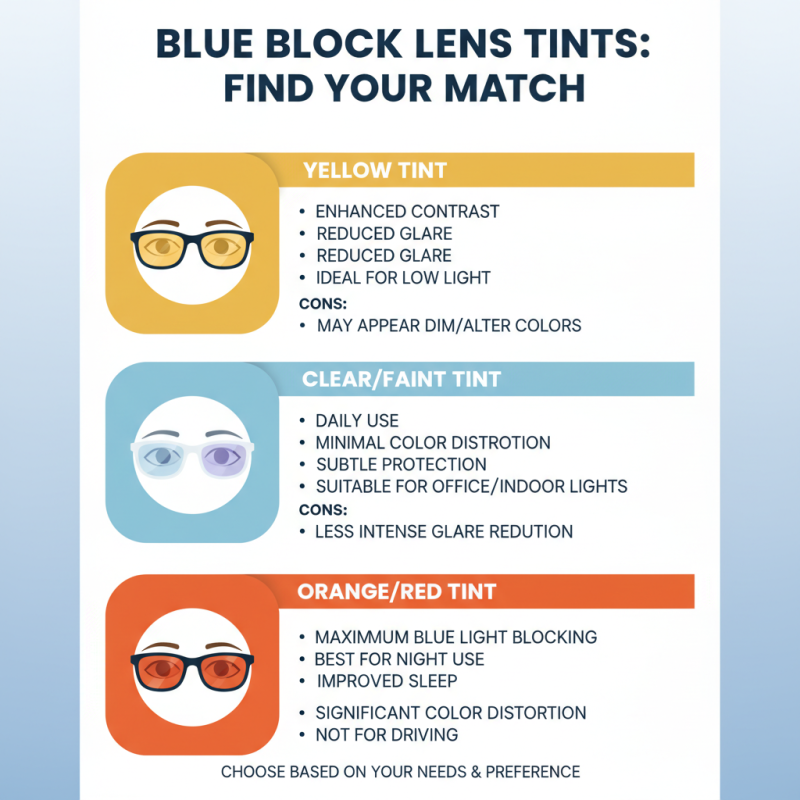
Choosing the right tint for blue block lenses involves understanding the different color options and their specific advantages. For instance, yellow tints can enhance contrast and reduce glare. They work well in low-light situations. Yellow lenses might not be suitable for everyone, though. Some may find them too dim or not visually appealing.

On the other hand, amber lenses offer more warmth. They improve depth perception and are beneficial for outdoor activities. However, they might alter color perception. It’s essential to consider how this affects daily tasks. Blue tints, like those that filter out harmful blue light, can reduce eye strain while using screens. This can be comforting for those who spend long hours in front of computers. Yet, someone may find them less effective in bright environments.

Emerald or green tints provide a calming effect. They are often preferred for activities like fishing or golfing, reducing glare from water. However, not everyone appreciates the color shift. It can be hard to tell what you’re missing. Ultimately, it’s about balancing personal preference with functionality. Testing different options may lead to better choices over time.

Assessing Additional Features: Anti-Reflective Coating and UV Protection

When choosing the right blue block lens, consider additional features like anti-reflective coating and UV protection. An anti-reflective coating reduces glare. This is especially helpful for those who spend long hours in front of screens. It creates a more comfortable visual experience. Look for lenses that absorb blue light effectively. Yet, you should not solely rely on this feature.

UV protection is just as crucial. Prolonged exposure to UV rays harms your eyes. Quality blue block lenses should also offer 100% UV protection. This protects against potential long-term damage. Check for certifications that guarantee this. Some lenses may claim to block blue light but lack proper UV filtering. It's essential to verify these claims.

Finding the right balance can be tricky. You may try different lenses before settling on one. Personal comfort should guide your choice. Remember that the perfect lens for one person might not suit another. Consult with eye care professionals if needed. They can provide insights tailored to your needs. Every detail counts in protecting your vision.

Comparison of Blue Block Lens Features