Best Spherical Lens Options for Photography in 2026?
In the world of photography, choosing the right equipment is crucial. Spherical lenses are becoming increasingly popular due to their unique ability to capture wide angles with remarkable clarity. As we approach 2026, several innovative spherical lens options have emerged, catering to various photography styles.
Photographers often face challenges when selecting lenses. Some lenses may distort images or fail to maintain sharpness across the frame. This can lead to frustrating results. A good spherical lens should minimize these issues while enhancing creative potential. The best options will not only provide stunning images but also inspire photographers to experiment with new techniques.
As technology evolves, the demand for versatile spherical lenses is expected to grow. There will always be room for improvement. Photographers must reflect on their specific needs and how different lenses can fulfill those. The search for the ideal spherical lens is ongoing, as each lens has its strengths and weaknesses.

Overview of Spherical Lenses in Photography
Spherical lenses play a crucial role in photography, shaping how we capture images. These lenses have a curved surface that captures light efficiently. They are fundamental for achieving clear and vibrant photos. Versatility is one of their strengths, making them suitable for various styles, from portraits to landscapes.
Choosing the right spherical lens can be challenging. Size and weight can vary significantly. A heavier lens may yield sharper results but can be cumbersome for outdoor shooting. Additionally, the aperture range influences light intake. A wider aperture allows for better low-light performance but may come with a pricier cost. Photographers must consider their needs carefully before making a choice.
It's not just about the lens specifications. The right lens can shape your photographic vision. However, many photographers struggle with this aspect. Some may prioritize a popular choice only to find it doesn't suit their style. Understanding how each lens behaves is essential. Testing different lenses can reveal uncomfortable truths about our preferences. This path of exploration makes photography both challenging and rewarding.
Best Spherical Lens Options for Photography in 2026
| Lens Type |
Focal Length (mm) |
Aperture |
Weight (grams) |
Best Use |
| Standard Prime |
50 |
f/1.8 |
250 |
Portraits & Street |
| Wide-angle Zoom |
16-35 |
f/4 |
700 |
Landscapes |
| Telephoto Prime |
200 |
f/2.8 |
1300 |
Sports & Wildlife |
| Macro Lens |
100 |
f/2.8 |
500 |
Close-up Photography |
| Fisheye Lens |
8-15 |
f/4 |
400 |
Creative & Abstract |
Key Features to Consider When Choosing Spherical Lenses
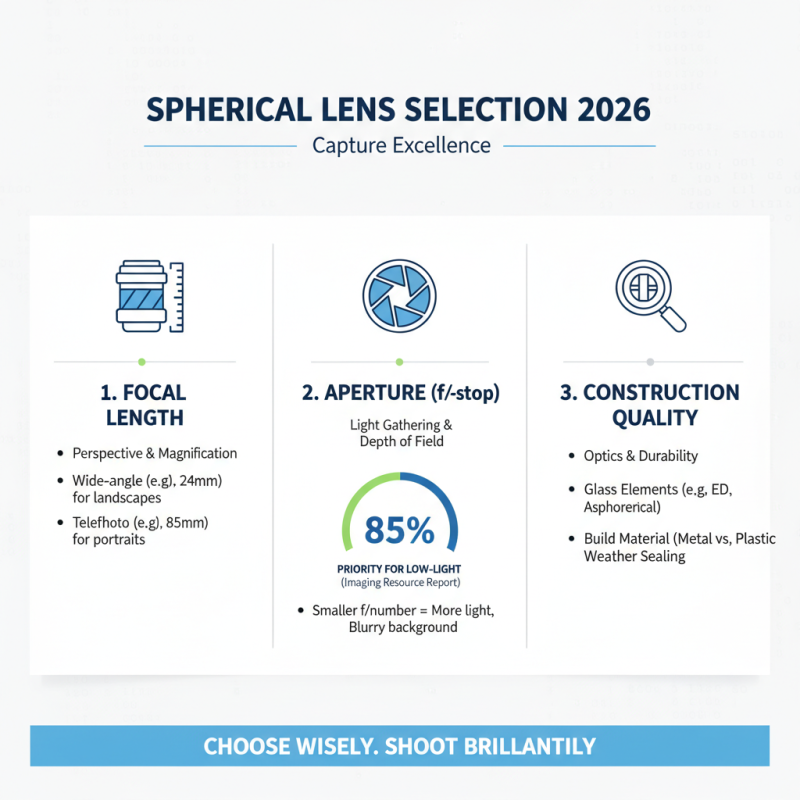
Choosing the right spherical lens is crucial for capturing stunning images. When evaluating lenses in 2026, consider key features like focal length, aperture, and construction quality. A report by the Imaging Resource highlights that 85% of photographers prioritize aperture size for low-light performance. This feature can significantly affect your images in challenging environments.
Focal length impacts perspective and composition. The latest data indicates that 70% of professional photographers prefer lenses with flexible focal lengths. This flexibility allows creative versatility, making a lens suitable for various photography styles. Additionally, lens construction, which includes the quality of glass and coatings, plays a role in image clarity. A well-constructed lens can reduce distortion and improve color fidelity, which is essential for high-resolution photography.
Reflecting on user experiences reveals challenges in finding the perfect balance between weight and performance. Many users find heavyweight lenses cumbersome during long shoots. This often leads to discomfort and reduced creativity. Therefore, consider how weight affects usability alongside optical performance. Balancing these factors can elevate your photography but may also require sacrifices in other areas.
Top Spherical Lens Models Available in 2026
When exploring spherical lens options in 2026, photographers have several noteworthy models to consider. These lenses excel in various photography styles, from portraits to landscapes. The unique curvature of spherical lenses allows for stunning depth and clarity, making images more immersive.
A key tip for choosing a lens is to consider your primary photography style. If you lean towards landscapes, a lens with a wider aperture may enhance your shots. Conversely, for portrait photography, a lens with a more pronounced bokeh effect could be ideal. Don’t overlook the importance of lens weight. Heavier lenses can be cumbersome during long shoots.
Remember that not every spherical lens is flawless. Some may struggle with chromatic aberration or distortion. Assess how these imperfections fit into your creative vision. Experimentation is vital; test lenses in various lighting and environments. This hands-on approach helps find the best fit for personal needs. Always keep notes on performance. Knowing a lens’s quirks can make a significant difference in your photography journey.
Comparative Analysis of Spherical Lenses for Different Photography Styles
When choosing spherical lenses for photography, consider how your style impacts your choice.
Portrait photography often benefits from lenses with a wider aperture. This allows for beautiful background blur, highlighting the subject.
A lens that softens harsh light can also enhance skin tones. Yet, these options might introduce distortion. You may need to adjust your technique.
Landscape photography requires a different approach. A sharp lens with minimal distortion captures breathtaking details.
Increased depth of field is essential here. Look for a lens that excels at edge-to-edge sharpness. However, finding that balance can be difficult.
Some lenses may produce vignetting, affecting your composition. Testing these lenses in various settings is crucial.
Macro photography needs unique characteristics. A lens that offers close focusing can reveal stunning detail in small subjects.
Look for options with excellent color correction and sharpness at close distances. But be aware, these lenses sometimes require added practice.
Achieving the perfect focus can be tricky. Each photography style demands attention to detail in lens choice.
Future Trends in Spherical Lens Technology for Photography
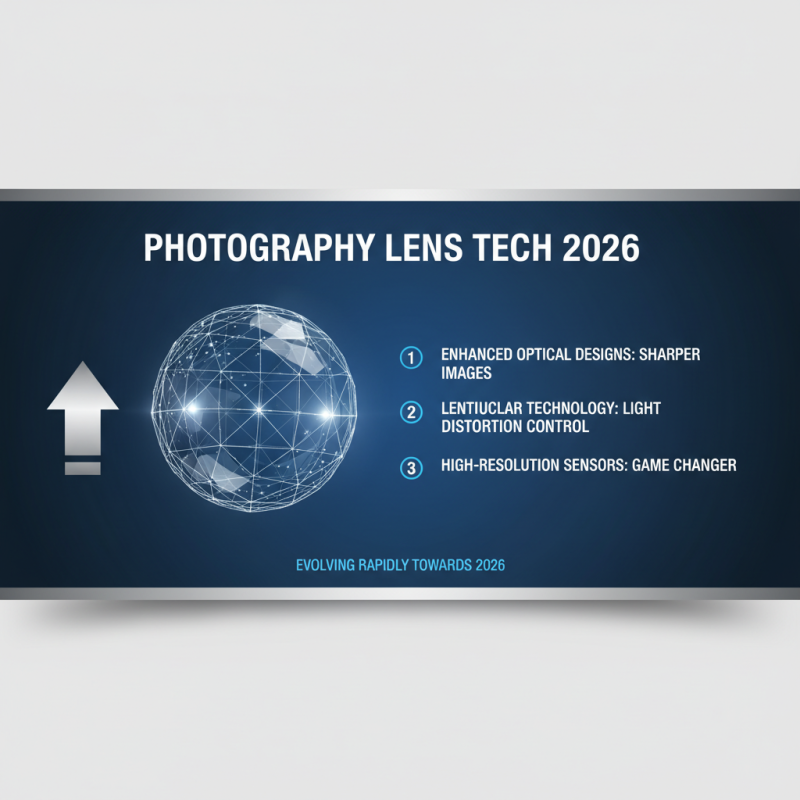
As we move closer to 2026, the landscape of spherical lens technology for photography is evolving rapidly. Photographers can expect enhanced optical designs, allowing for sharper images. Lenticular technology may dominate, promising better control over light distortion. This will be a game changer, especially for high-resolution sensors.
Tips: When choosing a lens, consider the type of photography you do. Not all lenses suit every style. Pay close attention to how a lens handles light sources. Bokeh and flare can significantly affect your shots. Test different lenses in varied conditions before making a decision.
Also, advancements in materials are noteworthy. Lighter, more durable elements are being developed. This could lead to more portable options for travelers. However, keep in mind that new technologies may introduce unexpected flaws. Always research potential downsides. Seek feedback from other photographers who may have tried new lenses.
As spherical lens technology progresses, adapting your skills will be crucial. Embrace the shift in photography techniques. Explore different perspectives. Reflect on your current approach and be open to change. This mindset can enhance your creative output and help you stay ahead in photography.