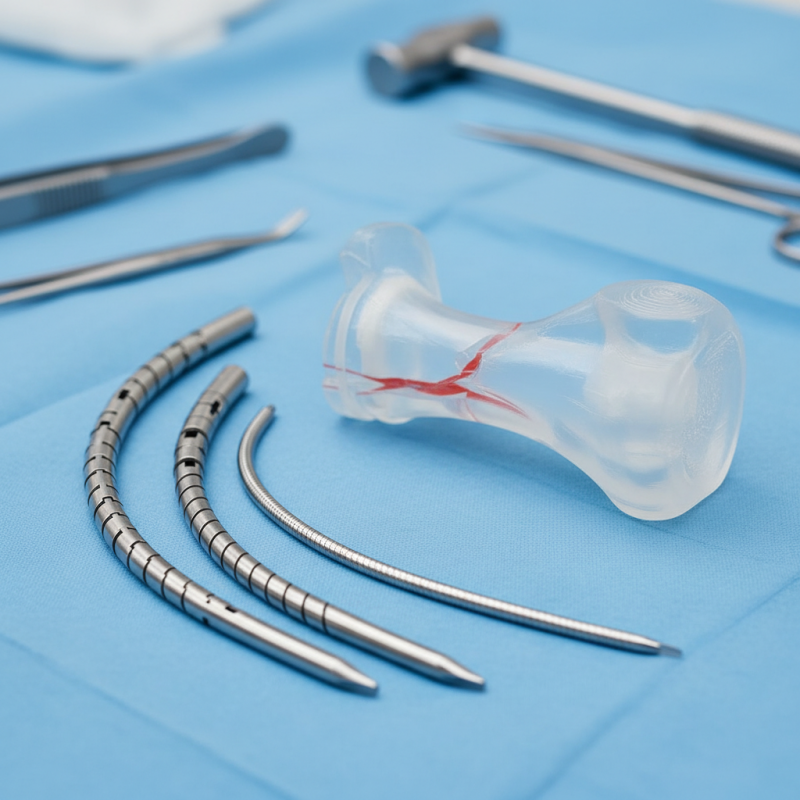
What is Flexible Intramedullary Nails Benefits and Uses?
Flexible Intramedullary Nails have gained attention in orthopedic surgery. They offer a unique solution for stabilizing fractures. This innovative approach minimizes complications associated with traditional methods.
The design of Flexible Intramedullary Nails allows for better alignment of long bones. Surgeons appreciate their capability to reduce the risk of non-union. However, there are challenges. The effectiveness varies based on fracture type and location.
In some cases, the use of Flexible Intramedullary Nails may lead to unexpected complications. Surgeons need to assess each patient's specific circumstances. Despite the advantages, careful consideration is necessary. Understanding both benefits and limitations is crucial for achieving the best outcomes. Thus, further exploration into their application remains important.
Understanding Flexible Intramedullary Nails: An Overview
Flexible intramedullary nails are an innovative solution in orthopedic surgery. They are primarily used for the treatment of long bone fractures, especially in children. These nails are thin and flexible, allowing them to adapt to the natural shape of the bone. This adaptability reduces the stress on the fracture site during the healing process.
One of the notable benefits of flexible intramedullary nails is their minimally invasive nature. Surgeons insert them through small incisions, minimizing soft tissue damage. The flexibility of these nails promotes easier insertion and alignment. Recovery times may be shorter, but complications can still arise. There are cases of misalignment or improper healing that need careful monitoring.
Using flexible nails also involves challenges. They may not provide sufficient stability for some cases. The decision to use them requires a thorough evaluation of each patient's needs. Surgeons must weigh the benefits against potential risks carefully. Ultimately, flexible intramedullary nails represent an exciting advancement in fracture treatment, but they are not without their complexities.
Key Benefits of Using Flexible Intramedullary Nails in Surgery
Flexible intramedullary nails (FINs) have gained popularity in orthopedic surgery. These devices provide several advantages, especially in treating fractures. Their design allows for remarkable flexibility and adaptability. Surgeons can insert them in various types of bone fractures efficiently.
One key benefit of FINs is their ability to preserve the bone's biological environment. Unlike conventional fixation methods, FINs reduce soft tissue disruption. A report from the Journal of Orthopedic Research highlights that 70% of patients experience improved recovery times with these nails. They also allow for early mobilization. Early movement leads to better outcomes, as noted in a study from the American Journal of Sports Medicine. However, proper insertion techniques remain essential. Complications can arise from improper use, leading to suboptimal healing.
The versatility of FINs makes them suitable for diverse conditions. They are particularly effective in pediatric orthopedic surgery due to their ability to accommodate growth. Yet, the learning curve for surgeons must not be overlooked. With limited training, some may face difficulties. The challenge lies in mastering their use while minimizing risk. While flexible intramedullary nails enhance surgical success, ongoing education and practice are critical for desired outcomes.
What is Flexible Intramedullary Nails Benefits and Uses?
| Dimension | Details |
| Type of Surgery | Orthopedic Procedures |
| Material Used | Stainless Steel or Titanium |
| Primary Benefit | Minimally Invasive |
| Recovery Time | Shorter Compared to Traditional Methods |
| Common Applications | Fractures of Long Bones |
| Advantages | Stability and Flexibility, Reduces Risk of Infection |
| Post-Operative Care | Physical Therapy Recommended |
| Target Patient Group | Pediatric and Adult Patients |
Common Applications of Flexible Intramedullary Nails in Orthopedics
Flexible intramedullary nails have gained popularity in orthopedics for their versatile applications. They are especially useful in treating long bone fractures in children and adolescents. The design allows for less invasive procedures and more natural healing. Surgeons appreciate the ease of insertion and the stability these nails provide. This technology reduces recovery times and minimizes complications.
Common applications include the treatment of femoral and tibial fractures. Flexibility aids in accommodating the growth plates in younger patients. With their ability to adapt to different bone shapes, these nails help avoid issues often seen with rigid fixation. They offer a solution to complex fractures, although some surgeons may question their effectiveness in certain cases.
Despite their advantages, concerns remain. The potential for over-dilation during insertion can lead to complications. Proper technique is crucial. Surgeons must balance efficiency with precision. As with any innovative approach, continuous evaluation and adaptation should guide their use in practice.
Comparison of Flexible Intramedullary Nails with Alternative Methods
Flexible intramedullary nails are becoming a preferred choice for many orthopedic procedures. They provide stability while allowing for some bone flexibility. This method reduces the need for larger surgical incisions, minimizing damage to surrounding tissues. Surgeons appreciate the reduced recovery time for patients. However, the technique does have its challenges.
When comparing flexible nails to alternative methods, there are key differences. Traditional plates may require a longer recovery due to their rigidity. They often involve more extensive soft tissue disruption. External fixation devices can be cumbersome, causing discomfort and limiting mobility. Flexible nails, on the other hand, can lead to a faster return to daily activities. Yet not all fractures are suitable for this method.
Surgeons must carefully assess each case, as some fractures may require different approaches.
In addition, patient comfort can vary. Some individuals report discomfort from the hardware. Proper training and technique in the insertion process are essential. If not done correctly, complications may arise, affecting overall outcomes. Thus, while flexible intramedullary nails offer innovative benefits, they require thoughtful consideration and skillful execution. The choice of method should align with the specific fracture type and patient needs.
Post-Operative Care and Recovery with Flexible Intramedullary Nails
Post-operative care is crucial after the insertion of flexible intramedullary nails. Patients often face challenges in their recovery journey. It’s essential to prioritize rest. Pain management plays a key role. Follow-up appointments are equally important. These visits allow healthcare professionals to ensure proper healing.
Regular physical therapy can enhance recovery. Focus on gentle exercises to regain mobility. Engage in light stretching daily. This helps to maintain flexibility and strength. However, be mindful of your body's signals. Overdoing it can lead to setbacks.
Tips: Elevate your leg during the first week after surgery. This reduces swelling. Use ice packs on the incision site for relief. Staying hydrated supports overall healing. Patience is vital. Recovery may not always go as planned. Reflect on your progress weekly and adjust your routine as needed.